
A water heater doesn't die in silence. It gives warning for months.

Rust, sediment, a relief valve that weeps: it shows signs long before it gives out. We look, tell you honestly whether it has time left, and replace it when it's time.
  • Units suppliedwarrantied and durable
  • Installed to coderelief valve, pan, discharge line
  • Itemized invoiceline by line
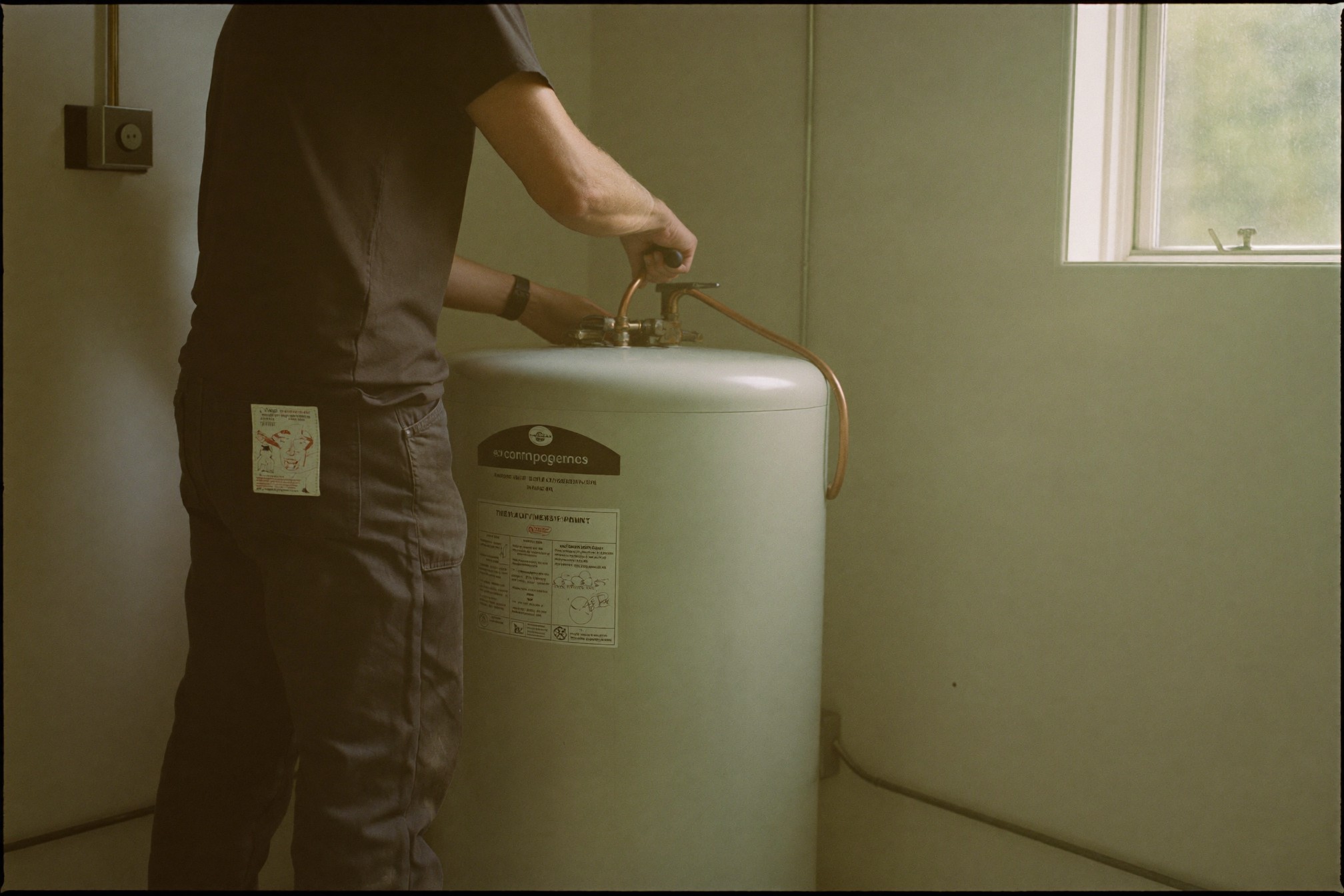
Installing a water heater in a mechanical room
Sound familiar?

Hot water runs short, and you've organized your life around it.

  • Two showers in a row, and the second one is cold.
  • A puddle keeps coming back at the foot of the tank, even after being wiped up.
  • A sound of pebbles or a kettle when it starts heating.
  • The hot water comes out rusty after a few days away.
  • You no longer know what year it's from, and you don't dare look.

A tank rusts through from the inside, slowly, and the day it gives out it's two hundred litres on the basement floor. None of these signs is an emergency today; together, they say it's better to choose the replacement date than to have it chosen for you.
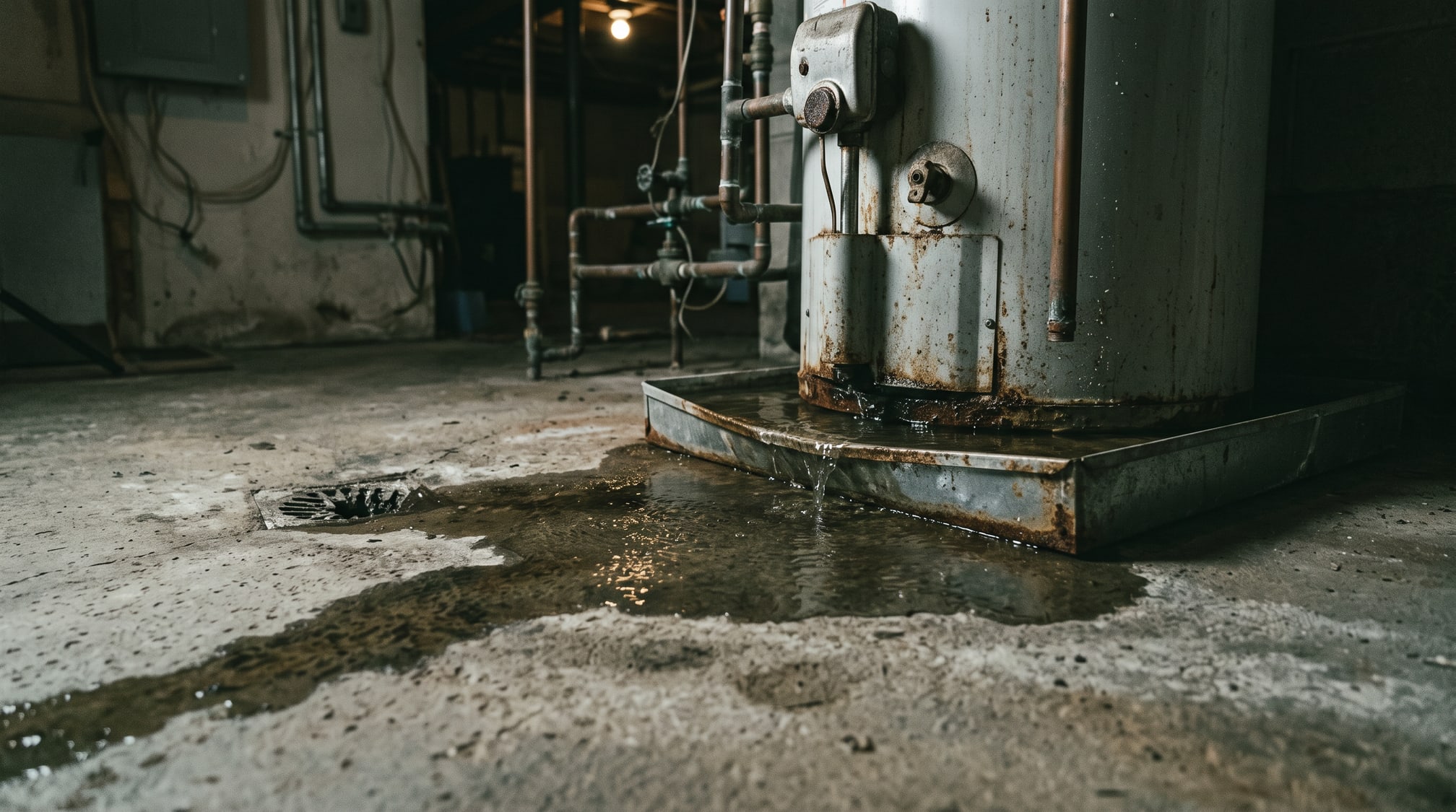
Puddle of water around the base of a water heater and an overflowing drip pan
The signs

Four things to look at, next time you go down to the basement.

A water heater can be checked in thirty seconds, and those thirty seconds are often worth the price of a flood. Here are the four places to look, and what each one means.
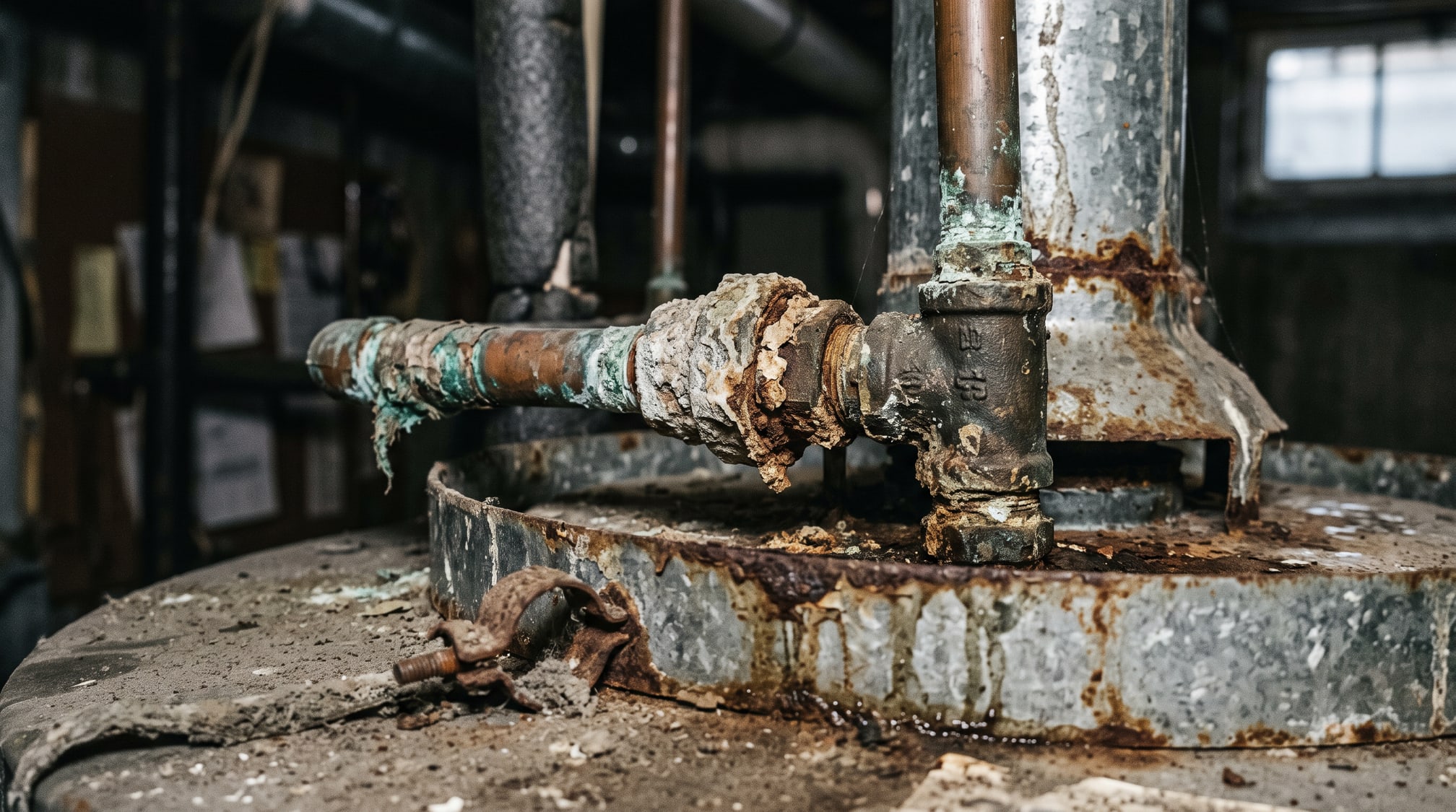
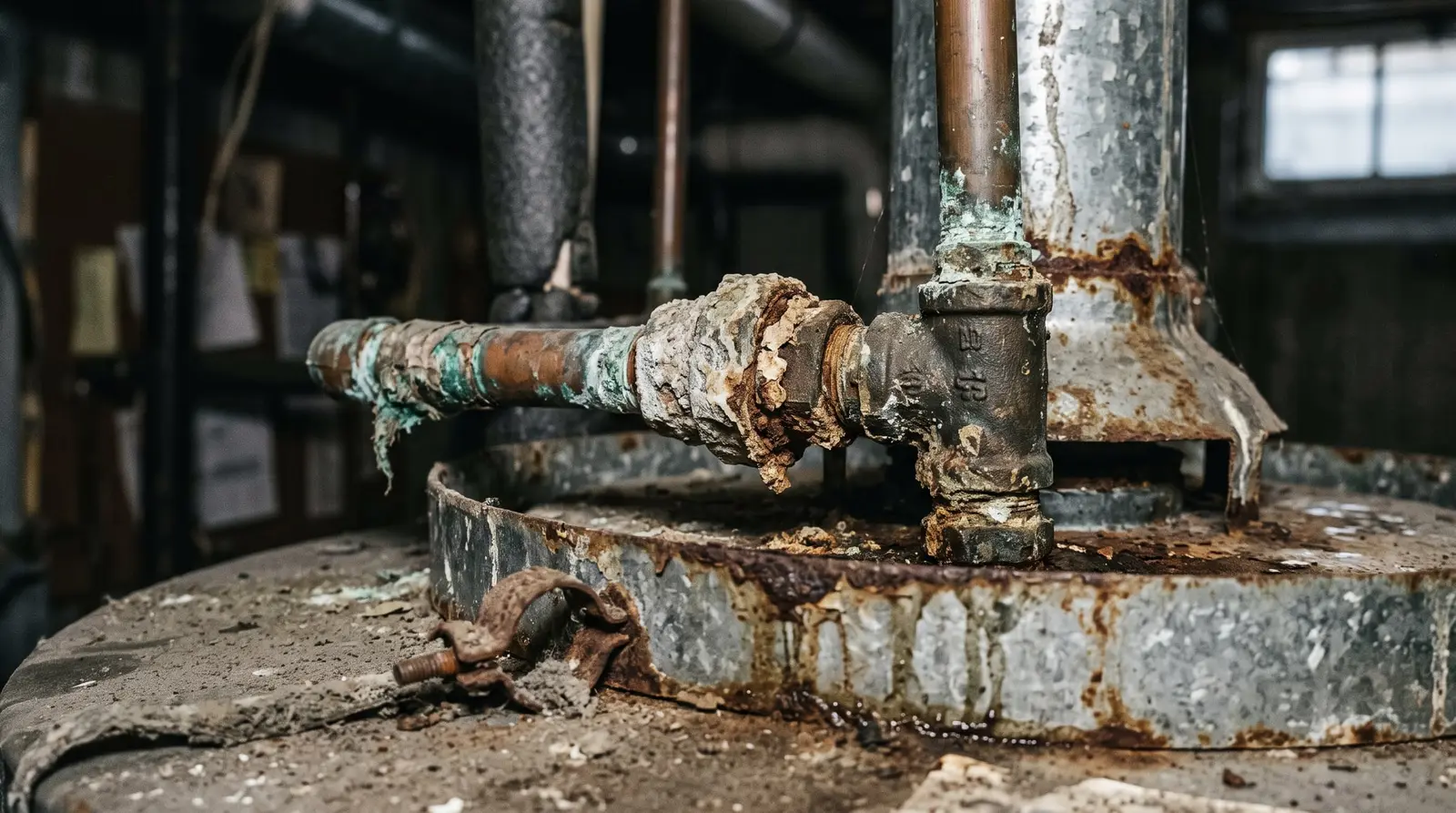
Corroded fittings on top of an aging water heater
The fittings on top

Green or whitish corrosion around the inlet and outlet. It starts as invisible dampness and ends as constant weeping.
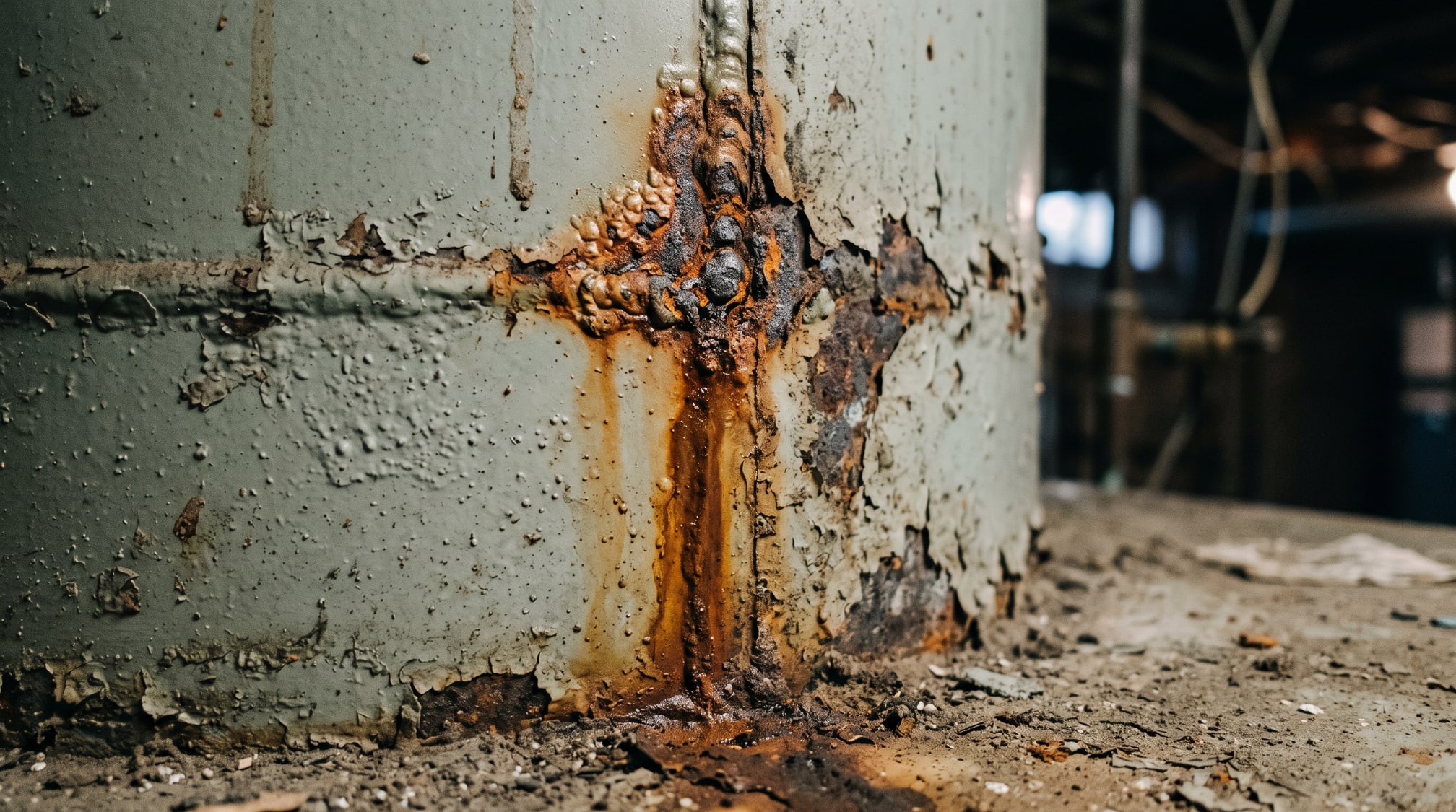
Rust streak running down the side of an old hot water tank
A rust streak

An orange trail down the side, under a weld or a seam. The tank is being attacked from the inside: what shows on the outside is months behind.
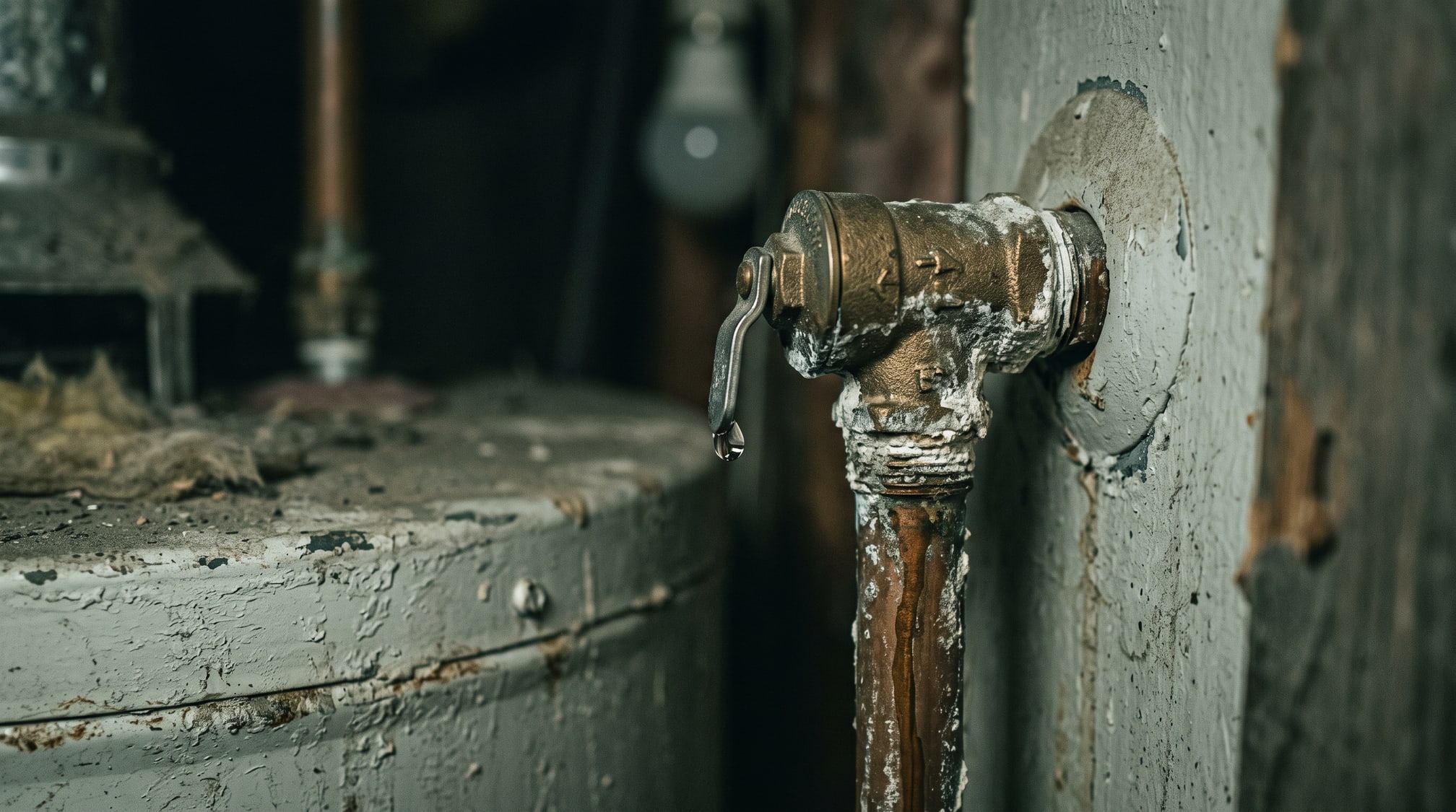
Scaled-up relief valve with a drop forming on it
The relief valve

The little lever on the side, with its pipe running down. If it drips or it's scaled up, the unit's safety is no longer certain, and it's the part that prevents the worst.
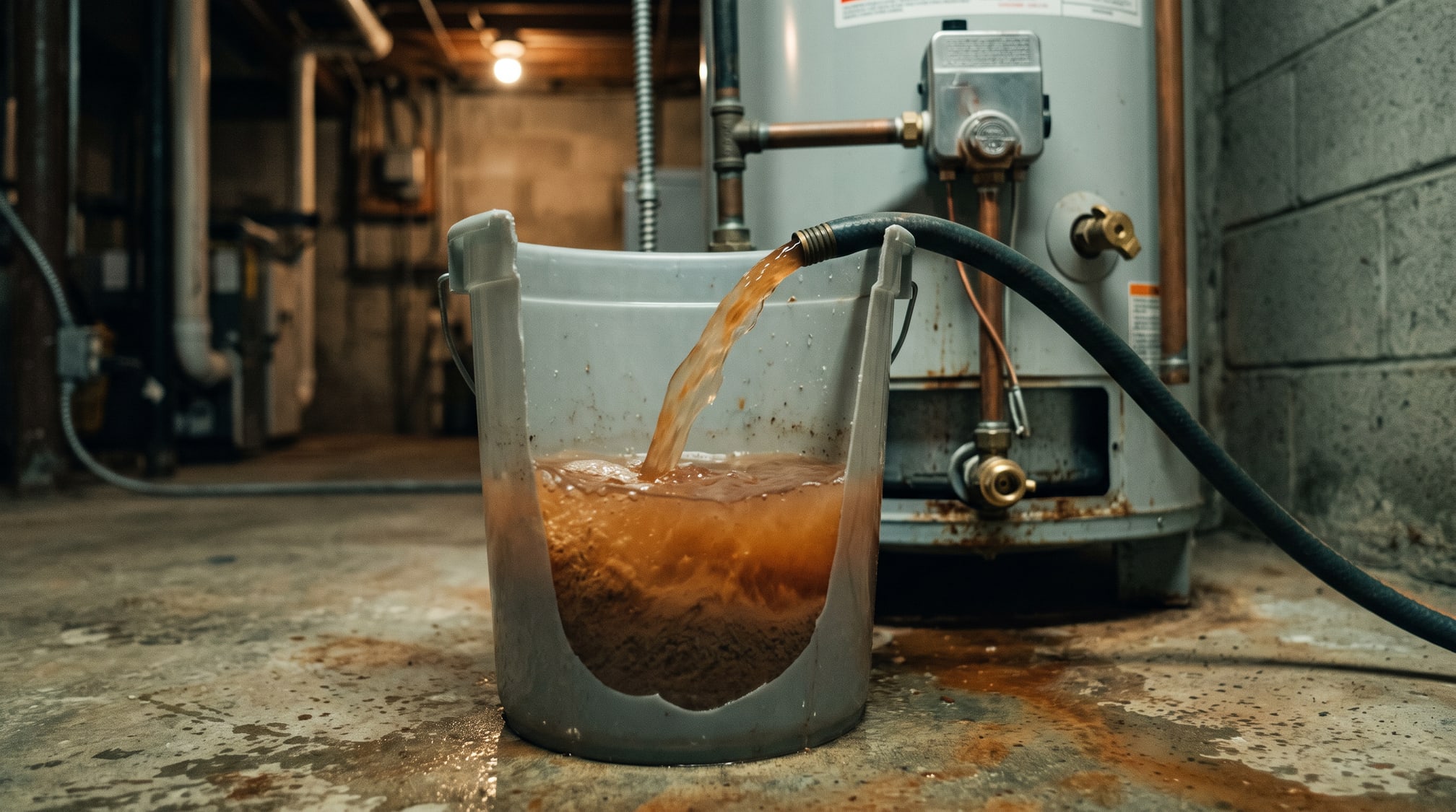
Cloudy water and sediment coming out when draining a water heater
What comes out when draining

Cloudy, rusty water full of sediment. The deposit builds up at the bottom, insulates the element from the rest of the water, and makes the unit work for nothing.
How it goes

One replacement, and hot water is back the same day.

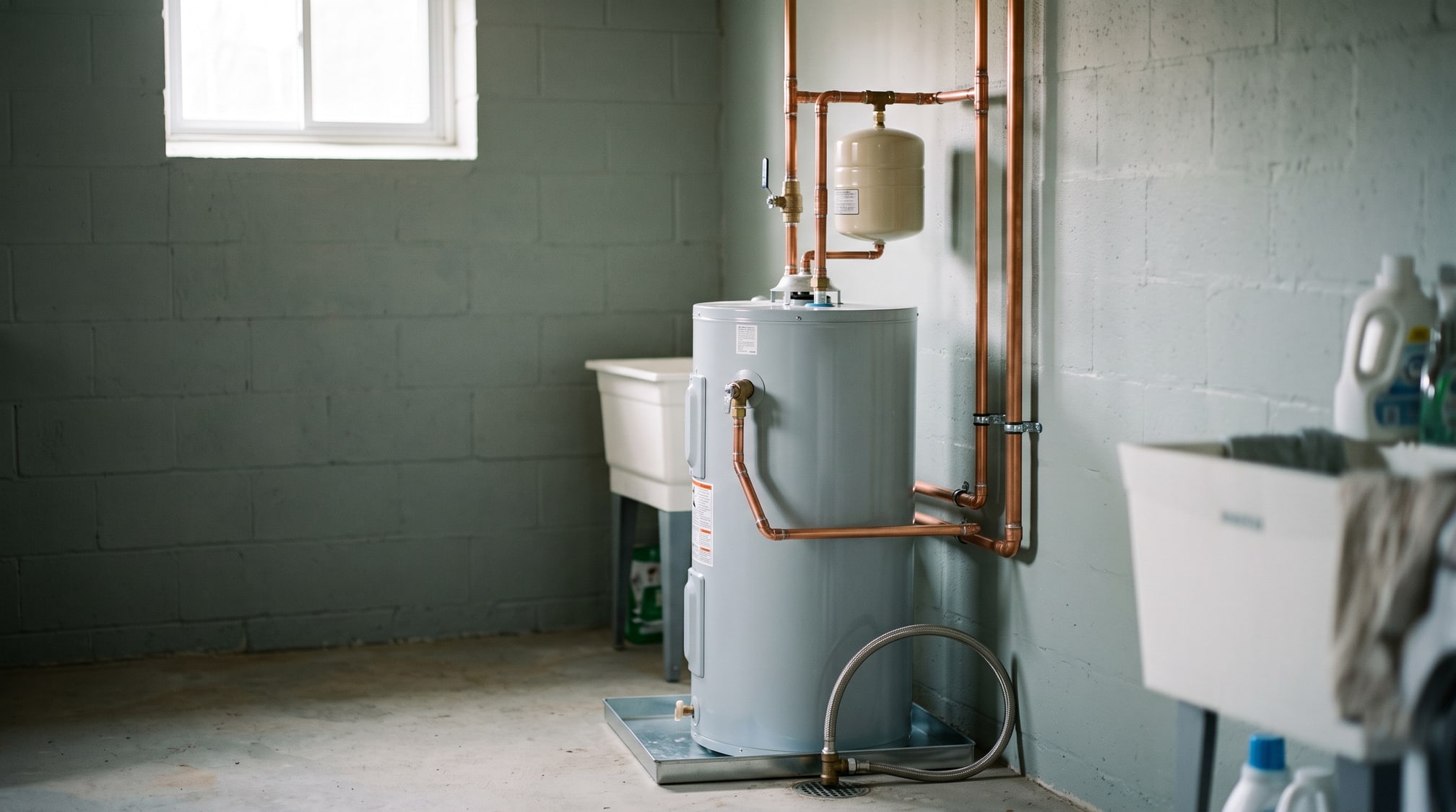
New water heater connected in copper, with drip pan and expansion tank
  1. 01

    We look before concluding

    Sometimes it's an element or a thermostat, not the tank. We say so when that's the case, even if it sells for less.

  2. 02

    We choose the unit with you

    The capacity based on the number of people in the house, not on what was there before. Too small, it wears out faster; too big, it heats water nobody uses.

  3. 03

    We drain and remove the old one

    Without making a mess, and without leaving it at the side of the road: the old unit leaves with us.

  4. 04

    We install to code

    Relief valve and its discharge line, drip pan, fittings redone as needed. Those are the details an insurer looks at.

  5. 05

    We hand you the itemized invoice

    Line by line, with the unit's warranty. It's a document to file, not to throw away.

The price

A replacement can be priced ahead of time. You know where you're headed.

  • IncludedThe unit chosen for your needs, its complete installation and the removal of the old tank, which leaves with us.
  • May be addedBringing things up to code when it was never done: drip pan, discharge line, fittings to redo. We tell you before starting, not on the invoice.
  • Costs nothingThe assessment. Describe your unit over the phone, its capacity and its age: you get the straight facts before we head out. And when it's only an element or a thermostat, we replace it and that's the end of it.

A water heater gets replaced once every twelve or fifteen years. Might as well make it the right time.

Have my water heater checked →
The materials

We don't install a unit we couldn't answer for.

  • The unit comes from us, with a valid warranty.
  • Its replacement parts exist and can be found in the region.
  • The installation is done to code, and the invoice shows it.
  • Our work is guaranteed because we answer for both.

It's the question that comes up most often on the phone: “I found a tank on sale, can you install it?” The answer is no, and it isn't about margin. A unit bought elsewhere often has no usable warranty and no available parts, and your insurer may refuse to cover the installation the day there's damage.
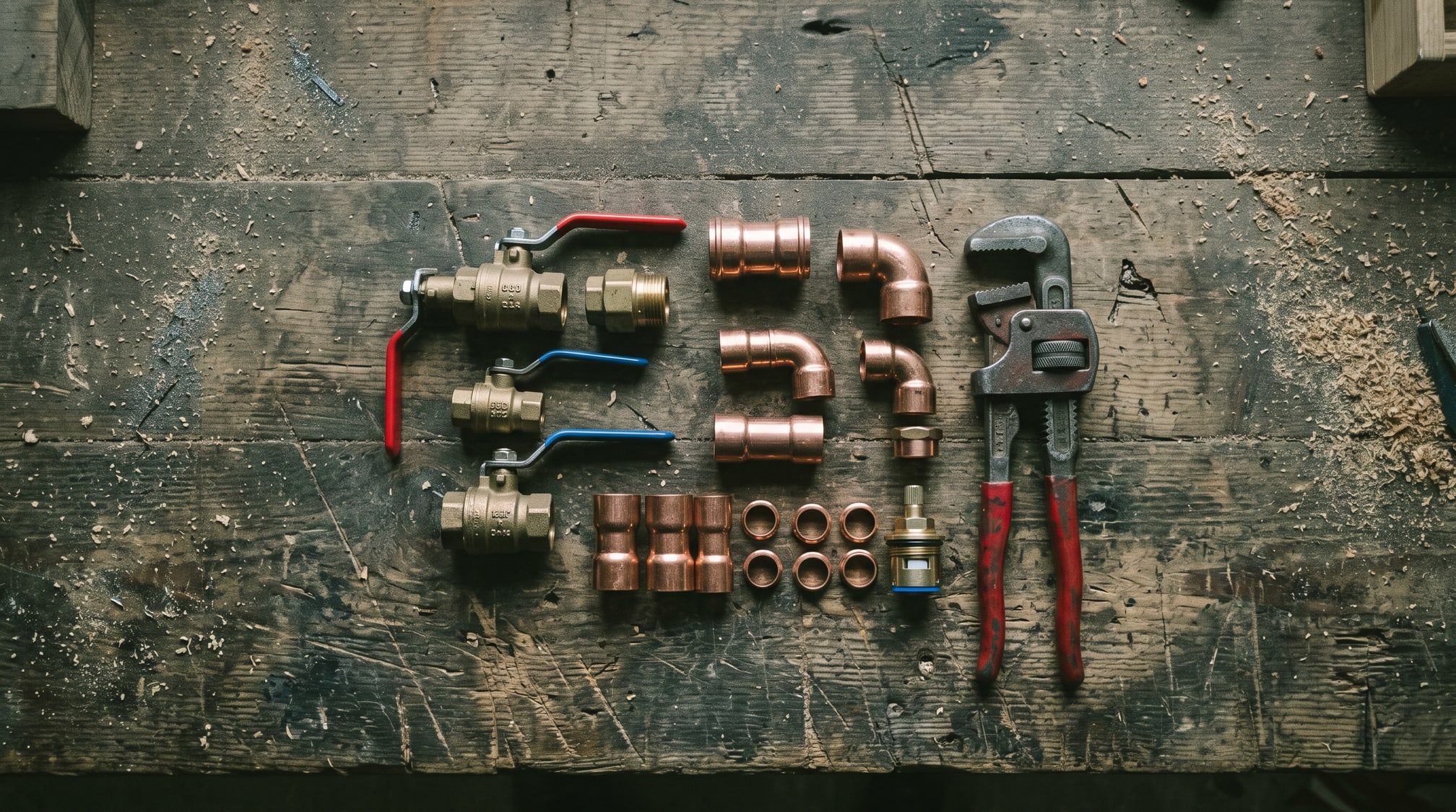
New plumbing parts lined up on a workbench
What comes next?

A water heater that gives out is rarely just a water heater.

Frequently asked questions

The water heater, in five questions.

Generally twelve to fifteen years. What shortens it is mostly the sediment that builds up at the bottom of the tank and the water quality. Past twelve years, a unit that has never been drained deserves a look. Not necessarily a replacement, but a look.

It's the right reflex, especially in areas with hard water. The sediment that settles at the bottom insulates the element: the unit heats longer for the same result, and wears out faster. A yearly drain costs a fraction of an early replacement.

No, and it's to protect you. A unit bought elsewhere often has no usable warranty and no available replacement parts, and your insurer may refuse to cover the installation in case of damage. We supply reliable, warrantied units, and we guarantee what we install.

It depends on the house and your habits, not on fashion. Tankless is worth considering when hot water is very irregular or when space is tight, but it needs a suitable supply and a more demanding installation. The tank remains the simplest and most predictable solution for most houses in the region. We talk it over before choosing.

Almost always, when the unit is in stock and the installation doesn't call for major rework. Draining the old one, taking it out, setting the new one and connecting it to code is done in one visit. Hot water is back the same day.

Let's start by finding out what's really going on.

Tell us the situation. You'll get a clear answer, realistic expectations and a solution suited to your home.