
A clogged drain can be cleared. A drain that keeps clogging can be explained.

Backup, slow drain, sewer smell: we first restore the flow, then look at what stopped it. Without the second half, we see each other again in six months.
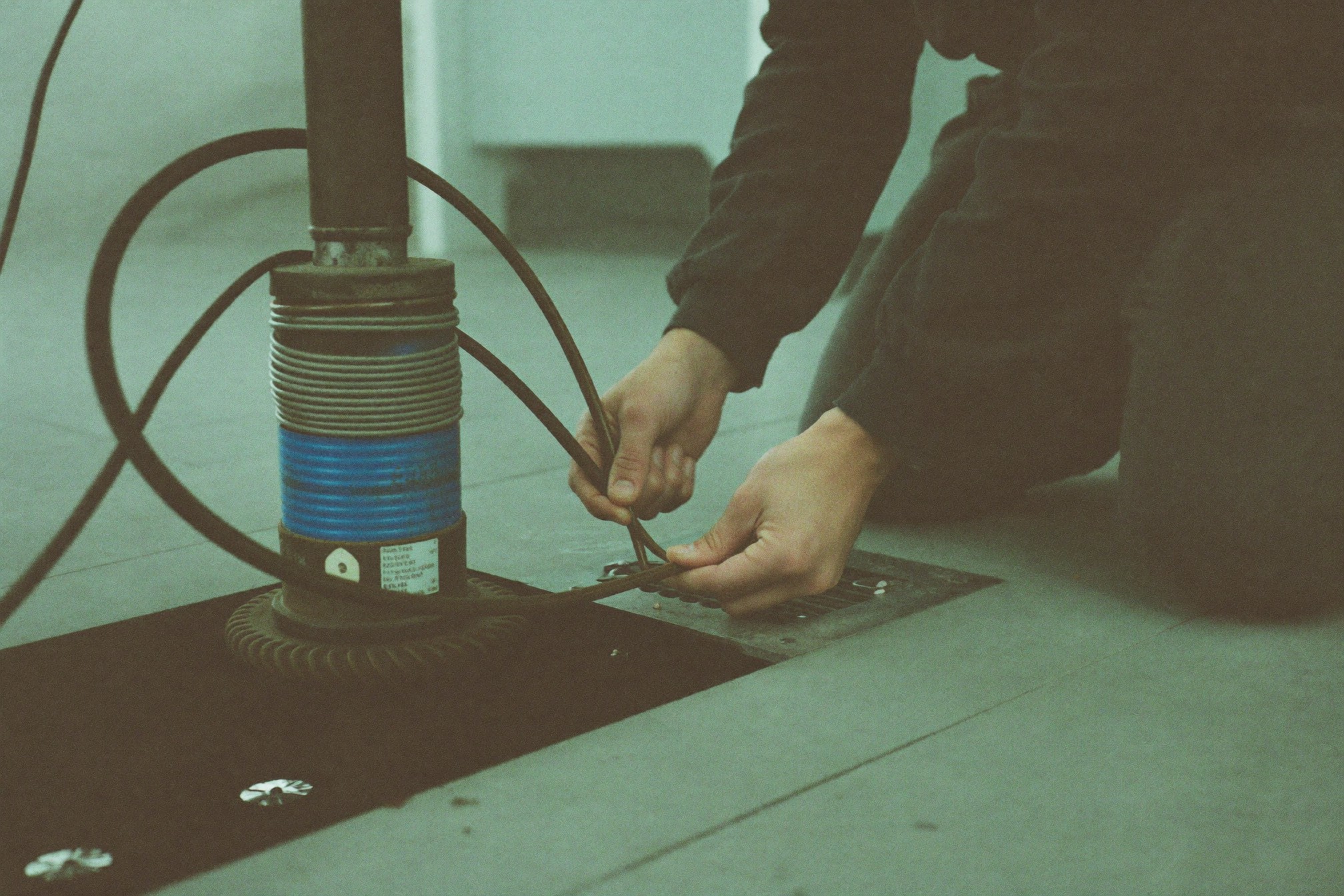
  • Full equipmentauger, pressure, camera
  • Camera on sitewhen it clogs again
  • Monday to Friday8 a.m. to 5 p.m.
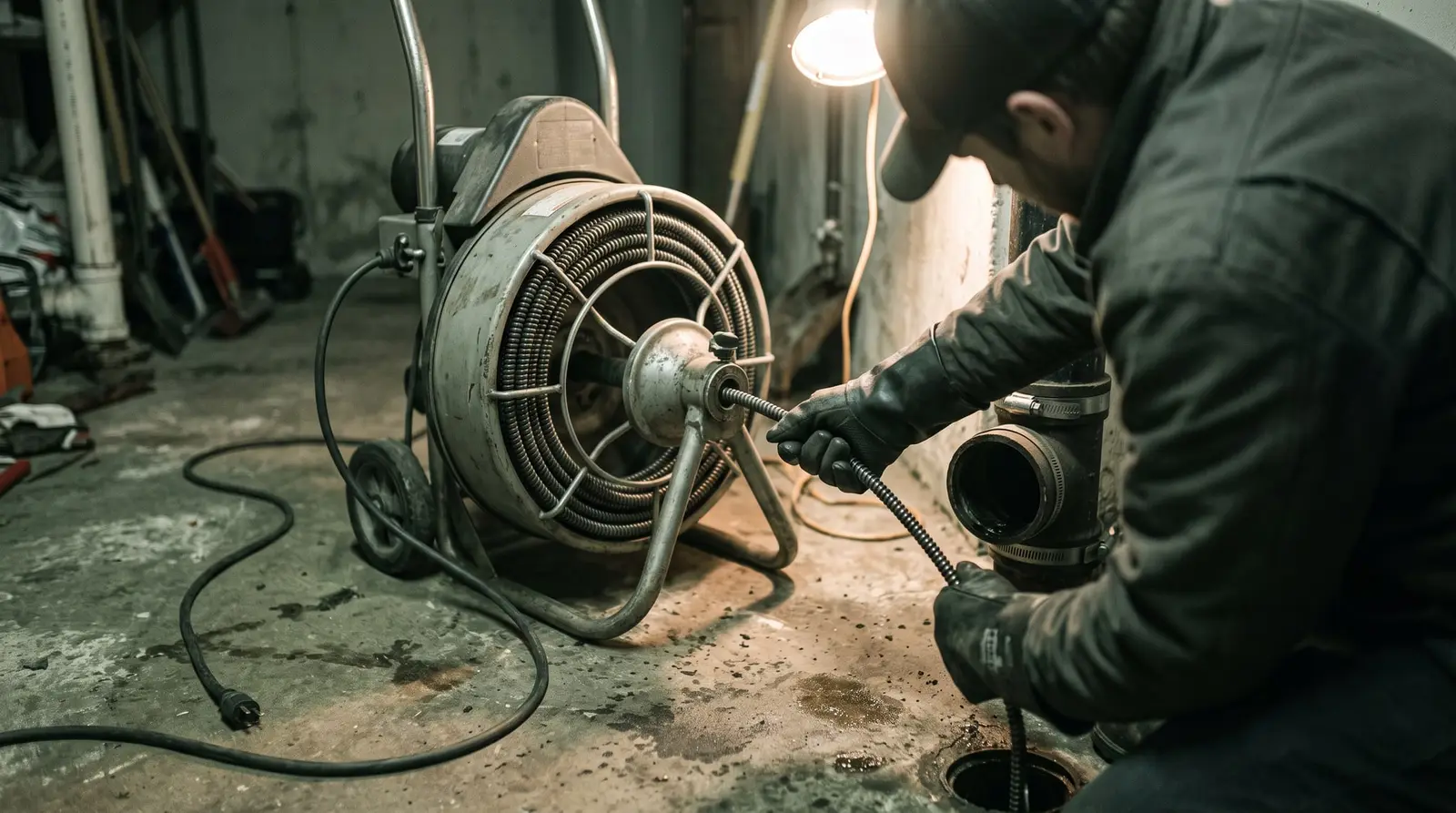
Clearing a floor drain with a drain machine
Sound familiar?

The water eventually goes down, but it takes longer and longer.

  • The tub drains more slowly every month.
  • The toilet gurgles when the washer empties.
  • A sewer smell comes up from the basement and nobody can find where.
  • Water comes back up the floor drain instead of going down.
  • You've had it cleared twice this year, in the same spot.

A drain doesn't clog all at once: it narrows for months, then a bad day comes. What matters isn't the clog we remove today, but knowing whether the pipe is simply dirty or whether something keeps it from staying clean.
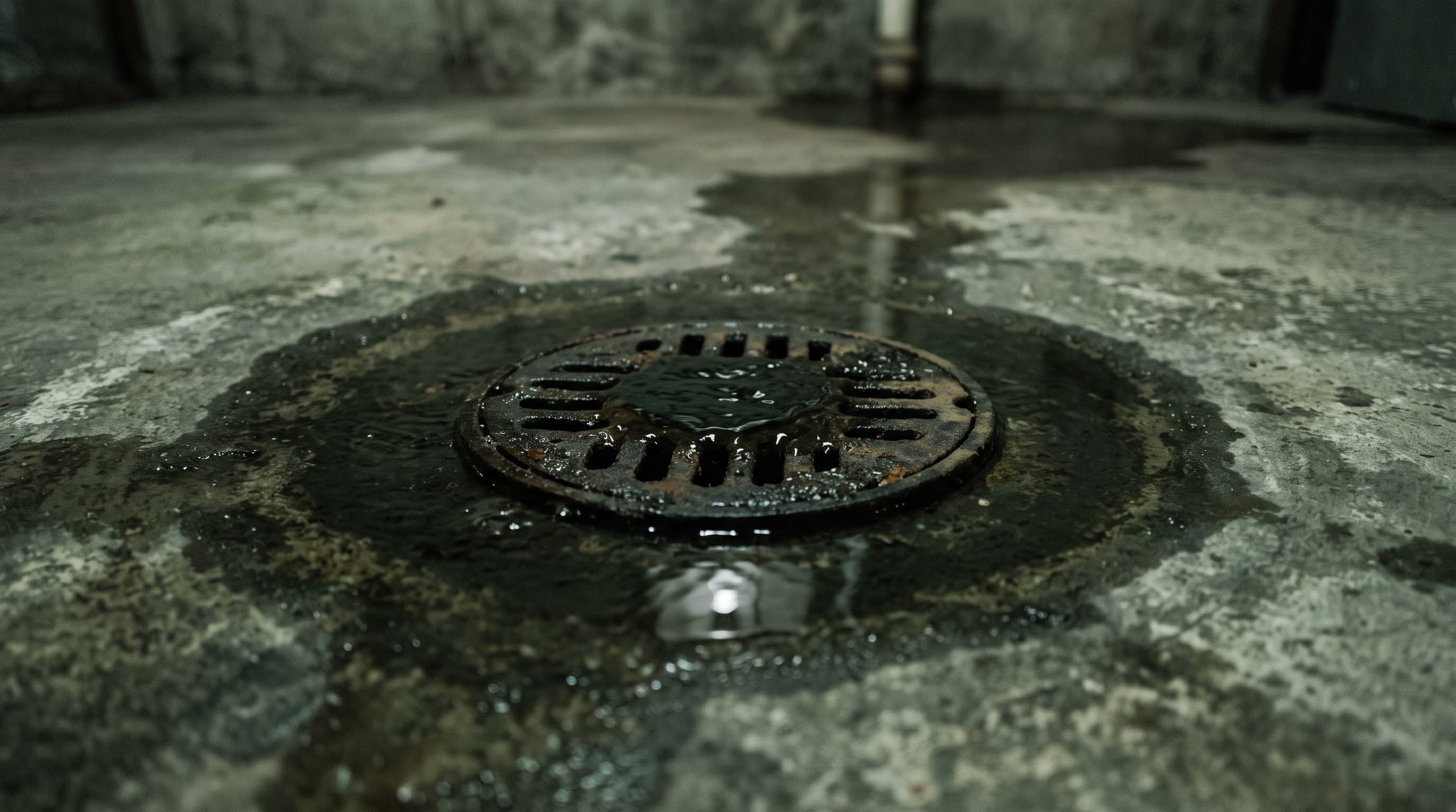
Water rising through the grate of a basement floor drain
How we do it

Four ways to clear a pipe. We choose based on what's inside.

There isn't one drain cleaning method, there are four, and the right one depends on what's blocking. An auger sent through a pipe lined with deposits punches through without cleaning it; pressurized water in a crushed pipe does nothing at all.
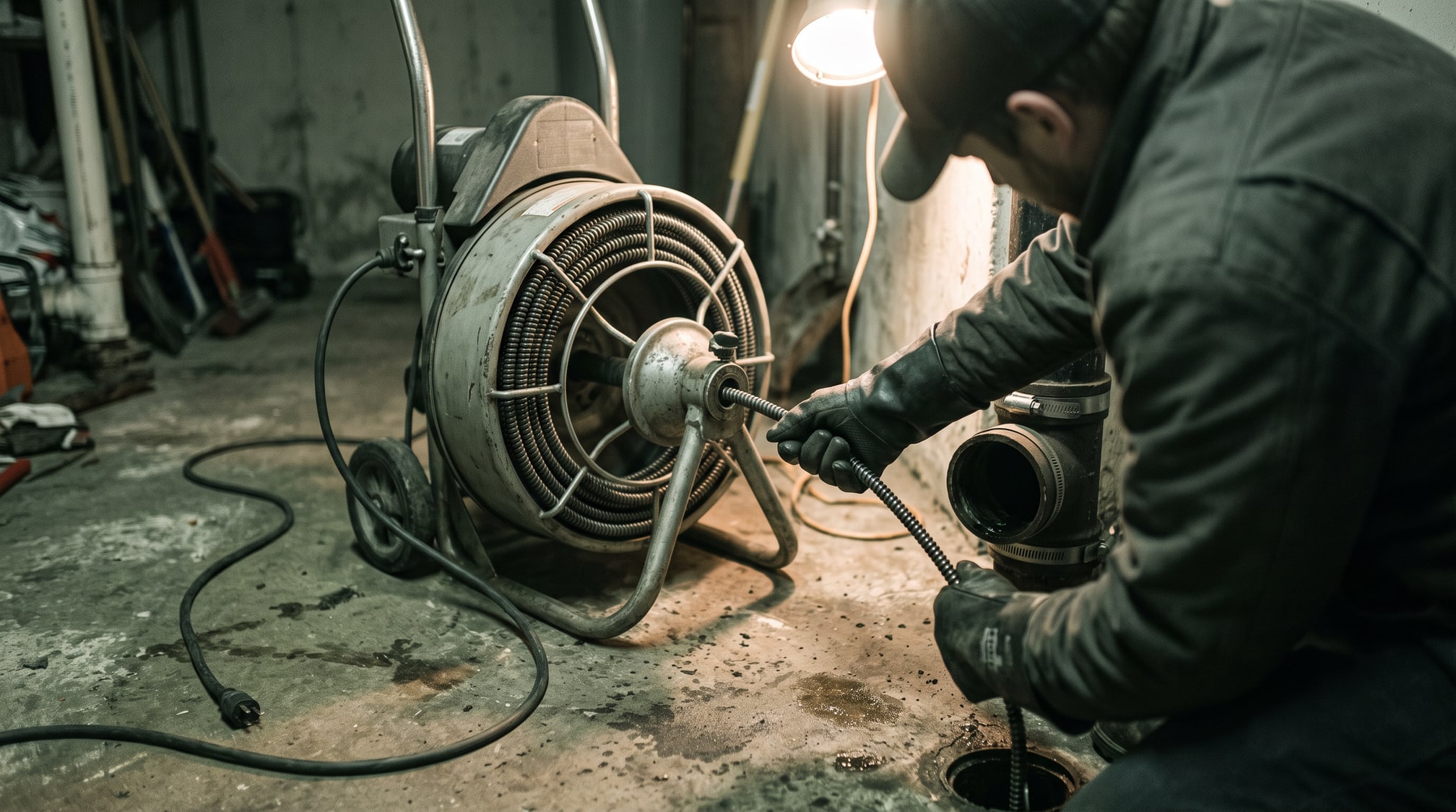
Drain machine at work on a basement cleanout
The auger

A motorized cable that punches through the clog and restores the flow. It's fast, it handles the majority of calls, and it's often all it takes.
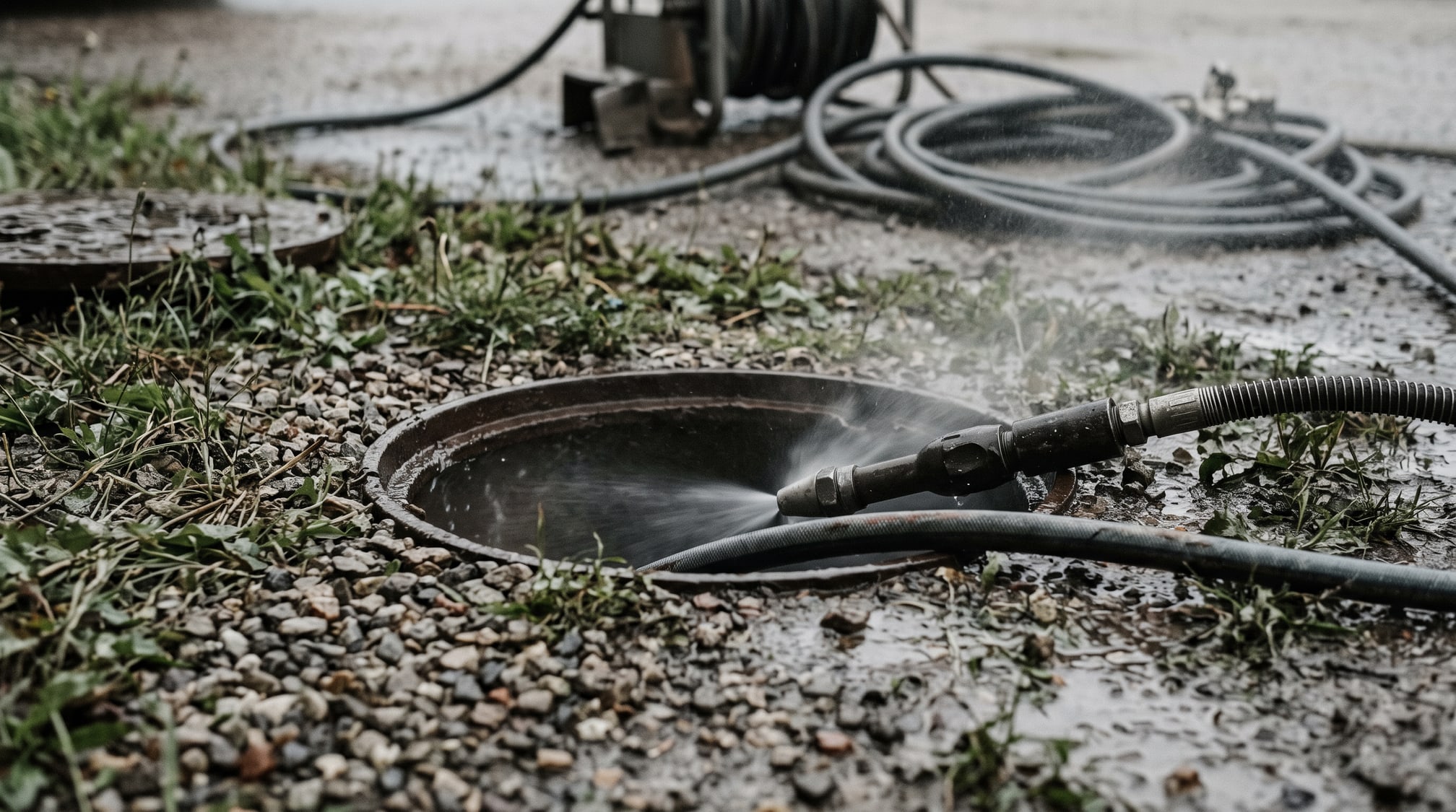
High-pressure flushing nozzle at the entrance of an outdoor cleanout
Pressure flushing

High-pressure water that washes the wall around its entire circumference. It's what brings a pipe lined with grease or deposits back to its original diameter.

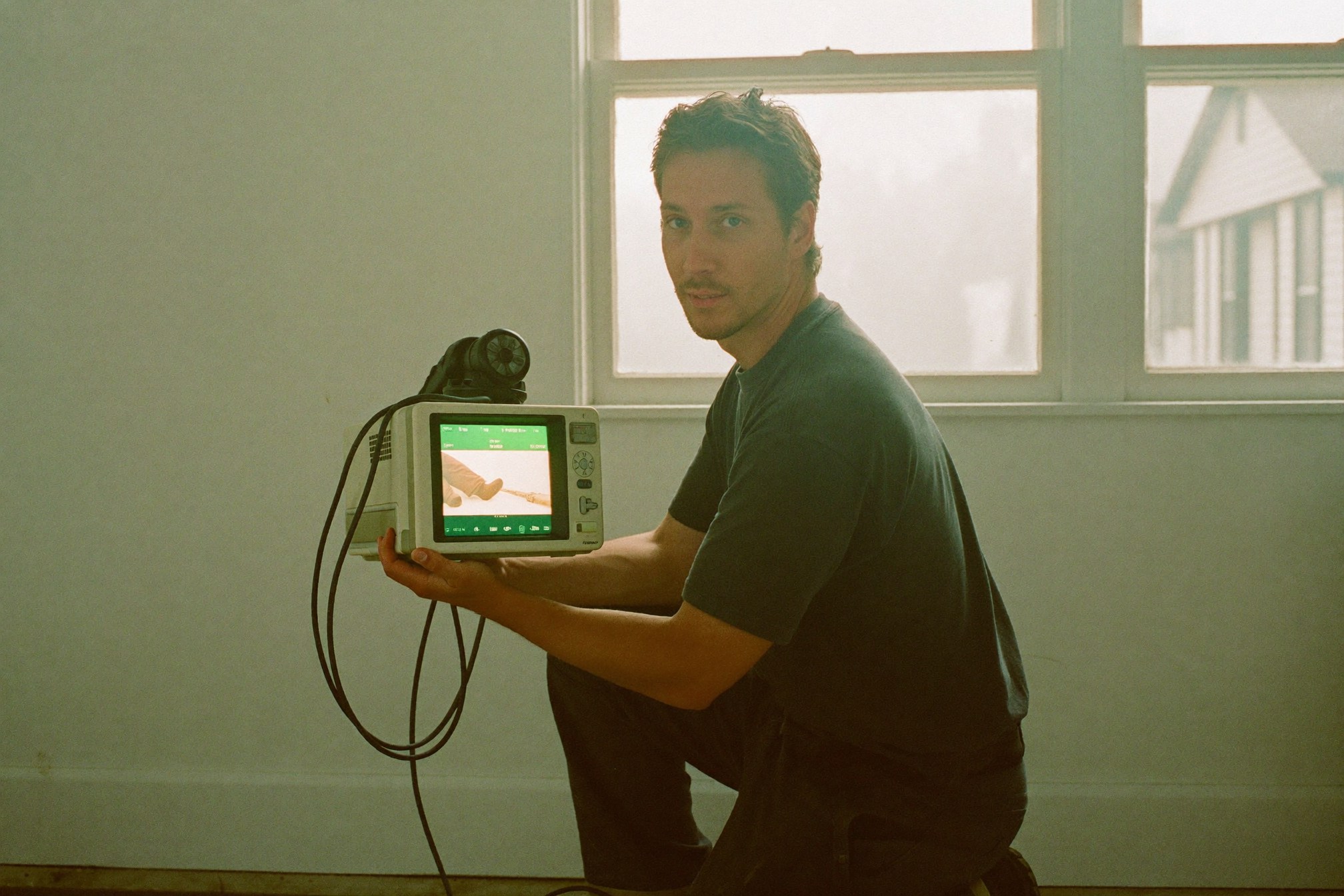
A plumber follows the inside of a pipe on his monitor as the camera films it
The camera

When the clog comes back, we stop guessing. The camera shows the cause and its exact position, and almost always explains why it's always the same spot.
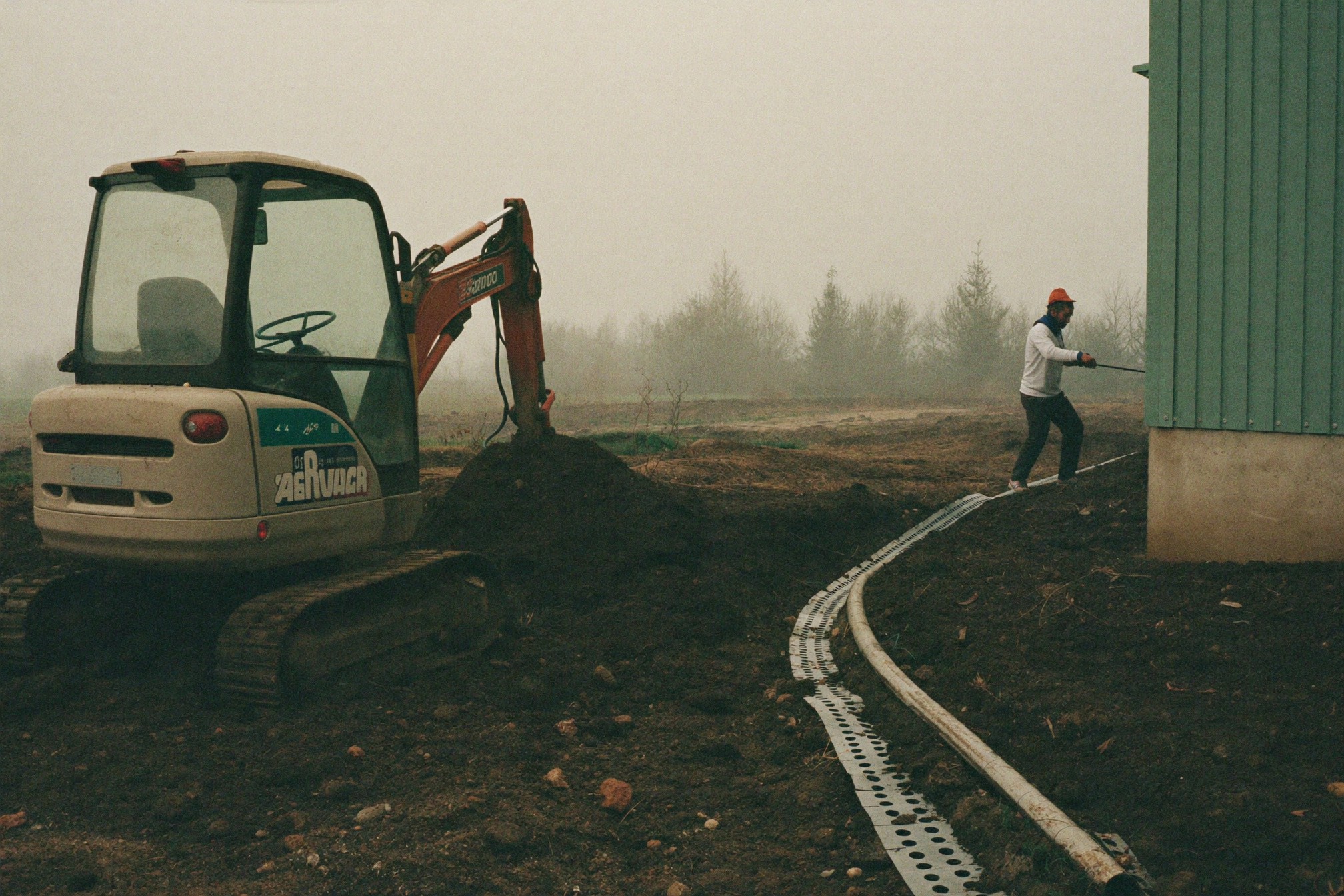
Excavating a pipe along a foundation
Excavation

The last resort, when the pipe is crushed, collapsed or overrun with roots. We dig, we replace, and the grounds are put back in order after the work.
How it goes

We restore the flow, then we check why it stopped.

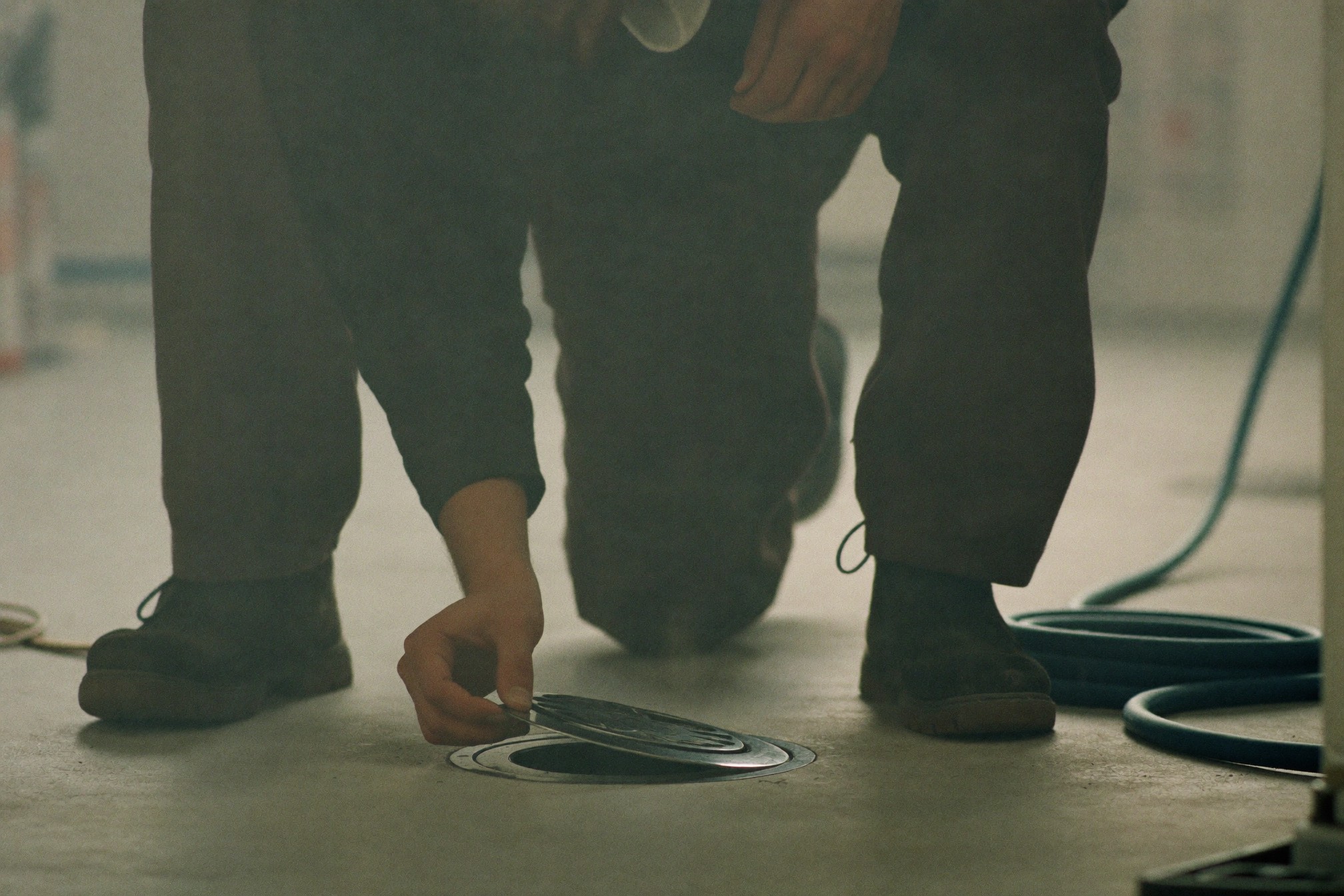
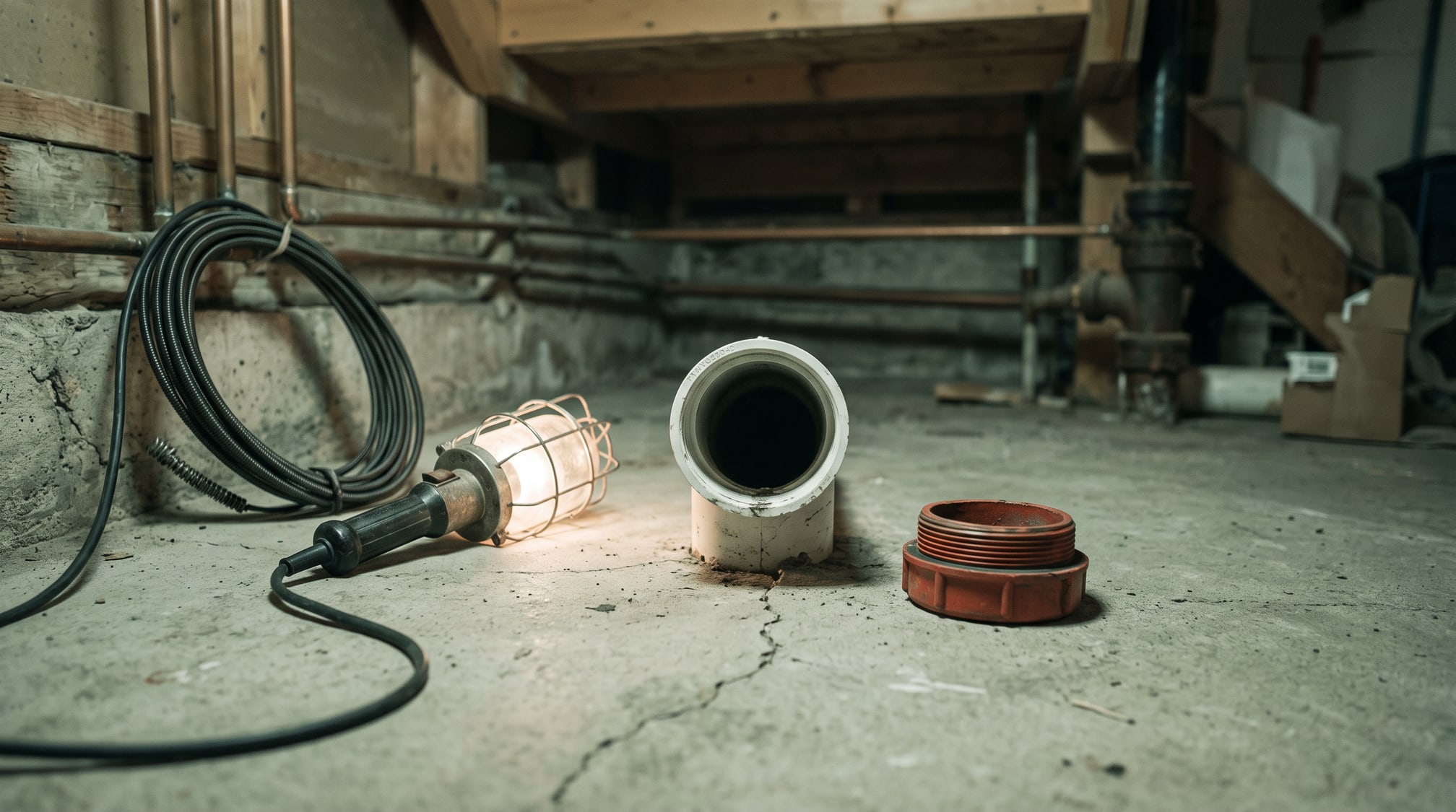
Open cleanout in a basement, cap unscrewed and cable ready
  1. 01

    You describe what's going on

    Which fixture, since when, how fast it got worse. A slow tub and a backing-up floor drain have nothing to do with each other.

  2. 02

    We find the right access

    Cleanout, floor drain or a removed toilet: we go in through the least invasive point, not the fastest.

  3. 03

    We clear it

    Auger or flushing, depending on what we find. The goal isn't to punch a hole through the clog, it's to give the pipe back its diameter.

  4. 04

    We test it for real

    Lots of water, for a long time. A drain that takes a bucket isn't a cleared drain.

  5. 05

    We tell you what we saw

    What was blocking, where, and whether it will come back. When the answer is yes, we explain what would prevent it.

The price

Drain cleaning has no fixed price. It has factors, and we name them.

  • What's countedWorking time, at the hourly rate, from leaving the office until returning. A sink clog and a main sewer fifteen metres out don't take the same time.
  • What gets addedThe camera inspection when it's warranted: $350, which includes locating and a video copy handed over at the end. The plumber's time is added.
  • What costs nothingOur opinion on what comes next. If the pipe is going to clog again, we say so, along with what would prevent it, even when it means fewer visits for us.

We'd rather name the factors than let you guess the total.

Describe my drain problem →
Why it comes back

A clog that re-forms isn't a clog. It's a symptom.

  • Hardened grease, narrowing the pipe year after year.
  • Roots that got in through a cracked joint, holding back everything that passes.
  • An offset joint, where debris always catches in the same spot.
  • Insufficient slope, letting water stagnate instead of sweeping through.
  • So-called flushable wipes, which never break down.

In these five cases, clearing takes care of the day but not the problem. That's why we suggest the camera when a drain keeps clogging: two hours seeing the cause beat three cleanings paid to guess at it.
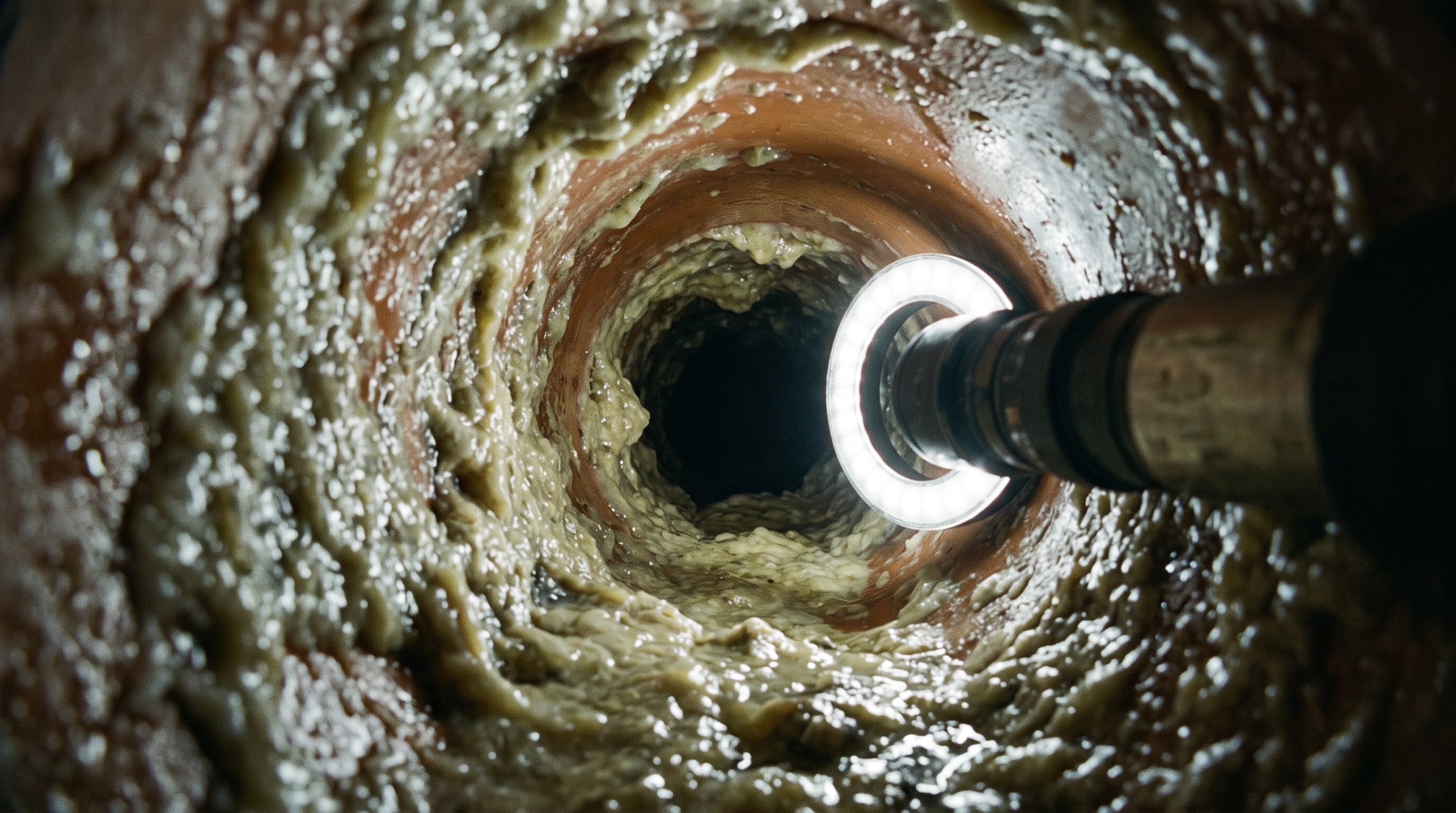
Camera view: hardened grease deposit narrowing a pipe
What comes next?

When drain cleaning isn't enough, here's what comes next.

Frequently asked questions

Drain cleaning, in five questions.

On a hair clog in a sink, sometimes. On a main drain, almost never: the product goes down to just above the clog, stops there, and sits attacking the pipe for hours. On old pipe, it does more damage than the clog itself, and it makes the next visit unpleasant for the person who has to take the trap apart.

It depends on what we find. A completely blocked pipe sometimes has to be cleared before the camera can get through. When the flow allows it, we film first: we then see the cause as it is, before touching it.

No. A pipe in good condition, with a proper slope, doesn't clog every year. A yearly cycle means something is still in there: a deposit that re-forms, roots that grow back, or a pipe defect that holds debris. It's exactly the case where the inspection pays for itself the first time.

No, even the ones labelled flushable. Toilet paper breaks down within minutes in water; wipes don't. They catch on the first obstacle in the pipe and clump together until they form a compact clog. It's one of the backup causes we remove most often.

We work in Brome-Missisquoi and Haute-Yamaska, from Farnham. If your town isn't on our list, ask anyway: we'll tell you honestly whether we go that far.

Let's start by finding out what's really going on.

Tell us the situation. You'll get a clear answer, realistic expectations and a solution suited to your home.