
Water doesn't come in through the foundation. It comes in because the drain no longer carries it away.

We look before digging, document what we find, excavate with our own machinery, and put the grounds back in order.
  • Turnkeyfrom digging to lawn
  • Camera firstbefore digging
  • Grounds restoredbackfill and lawn
Excavating a French drain along a foundation
Sound familiar?

The basement smells musty, and nobody can find where it's coming from.

  • A dark line at the bottom of the foundation wall, coming back every spring.
  • A white powder on the concrete that returns every time it's wiped off.
  • The floor is damp without the slightest pipe leak.
  • Water appears after a heavy rain and disappears three days later.
  • The boxes stored on the floor smell of mould from underneath.

A foundation doesn't leak: it absorbs. As long as the French drain goes around it and drains away, water never builds up against the concrete. When that drain is clogged, crushed or silted up, pressure rises along the wall, and the concrete lets through what it has always let through.
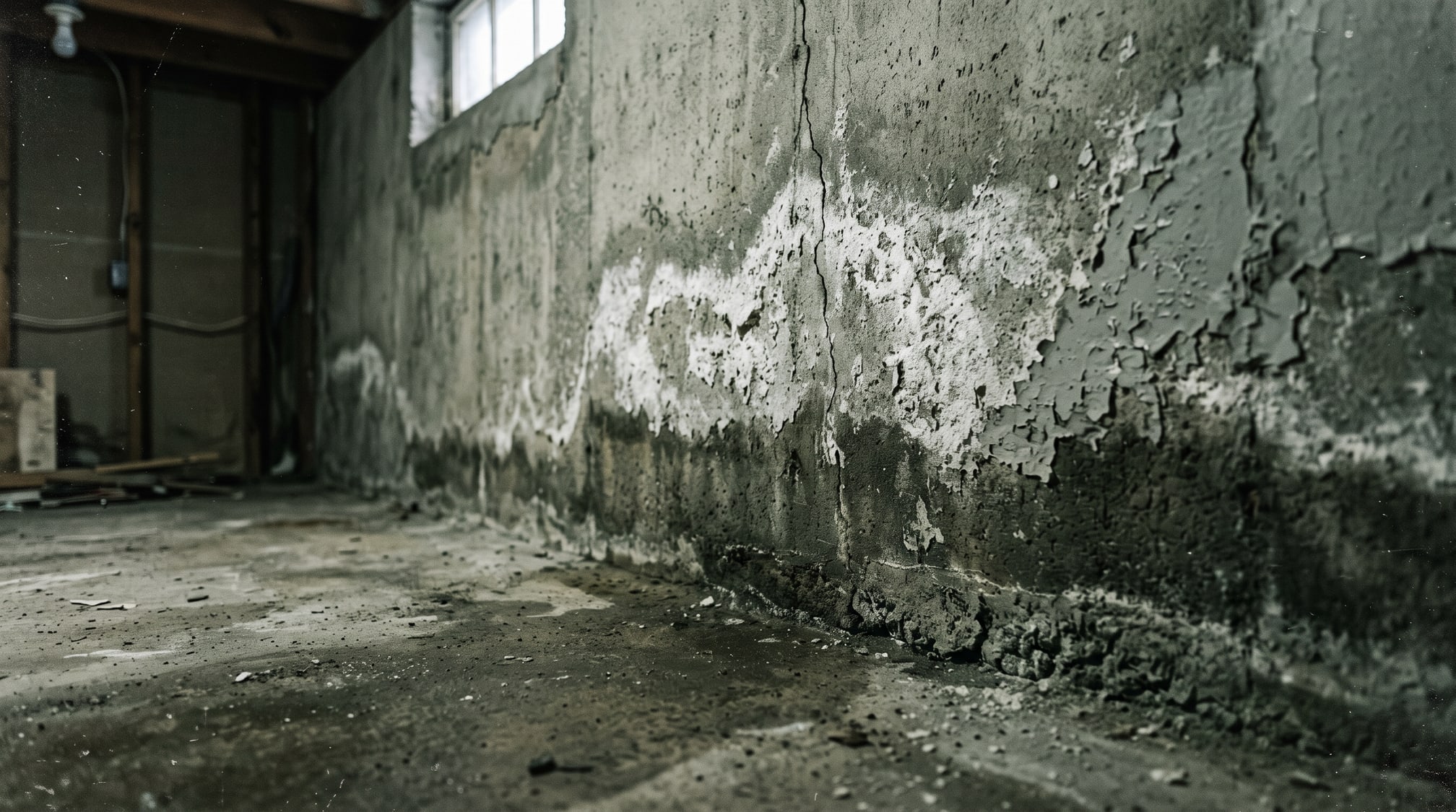
Moisture stain and white efflorescence at the base of a foundation wall
What we dig up

A French drain doesn't die all at once. Here are the four states we find them in.

Nobody has ever seen the drain that goes around their house: it's been underground since the day it was built. Here's what we dig up most often, and what each case means for what comes next.
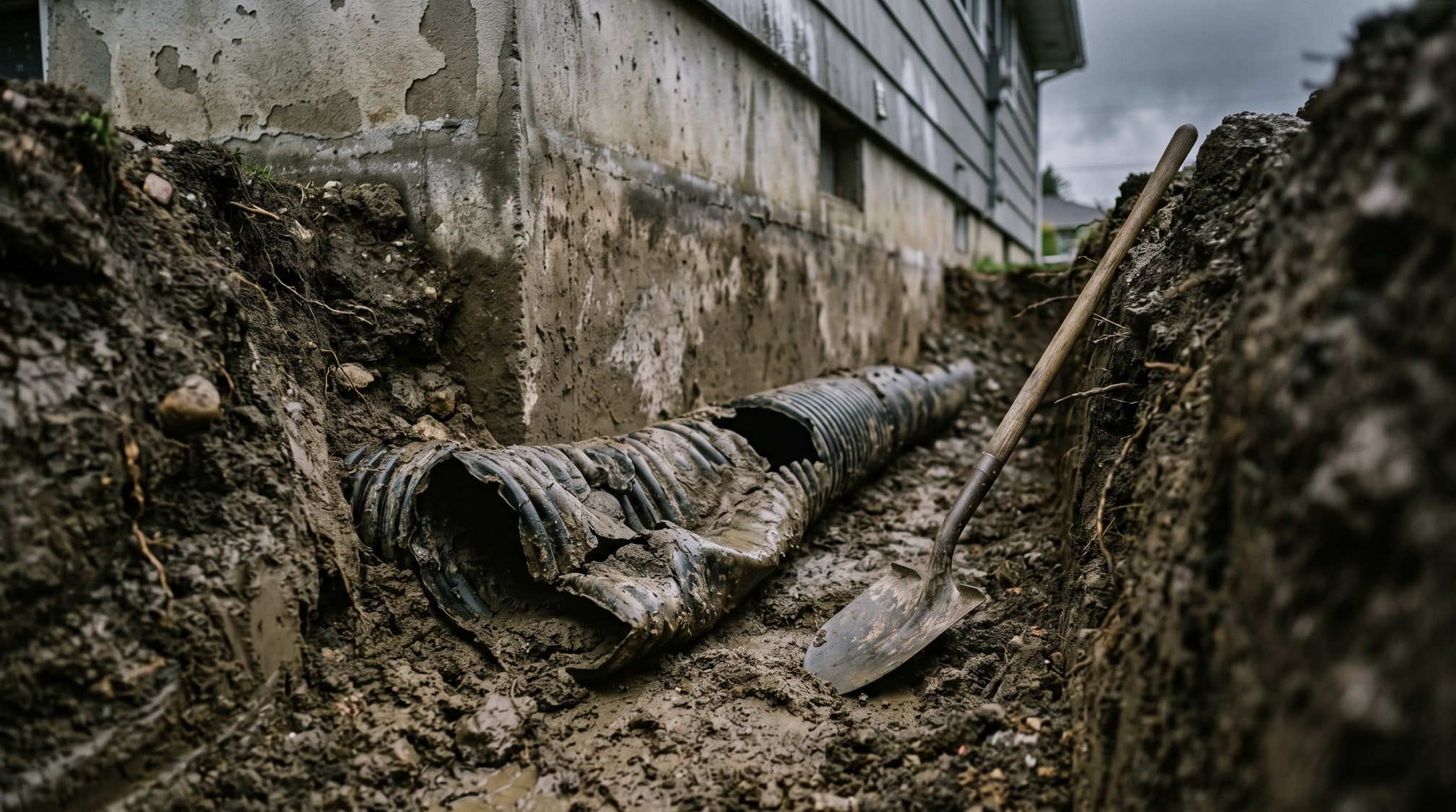
Unearthed section of drain, its fabric sock torn in the wet clay
The torn sock

The fabric protecting the drain tears or silts up. Fine soil then goes straight into the pipe and settles there, year after year, until it fills it.
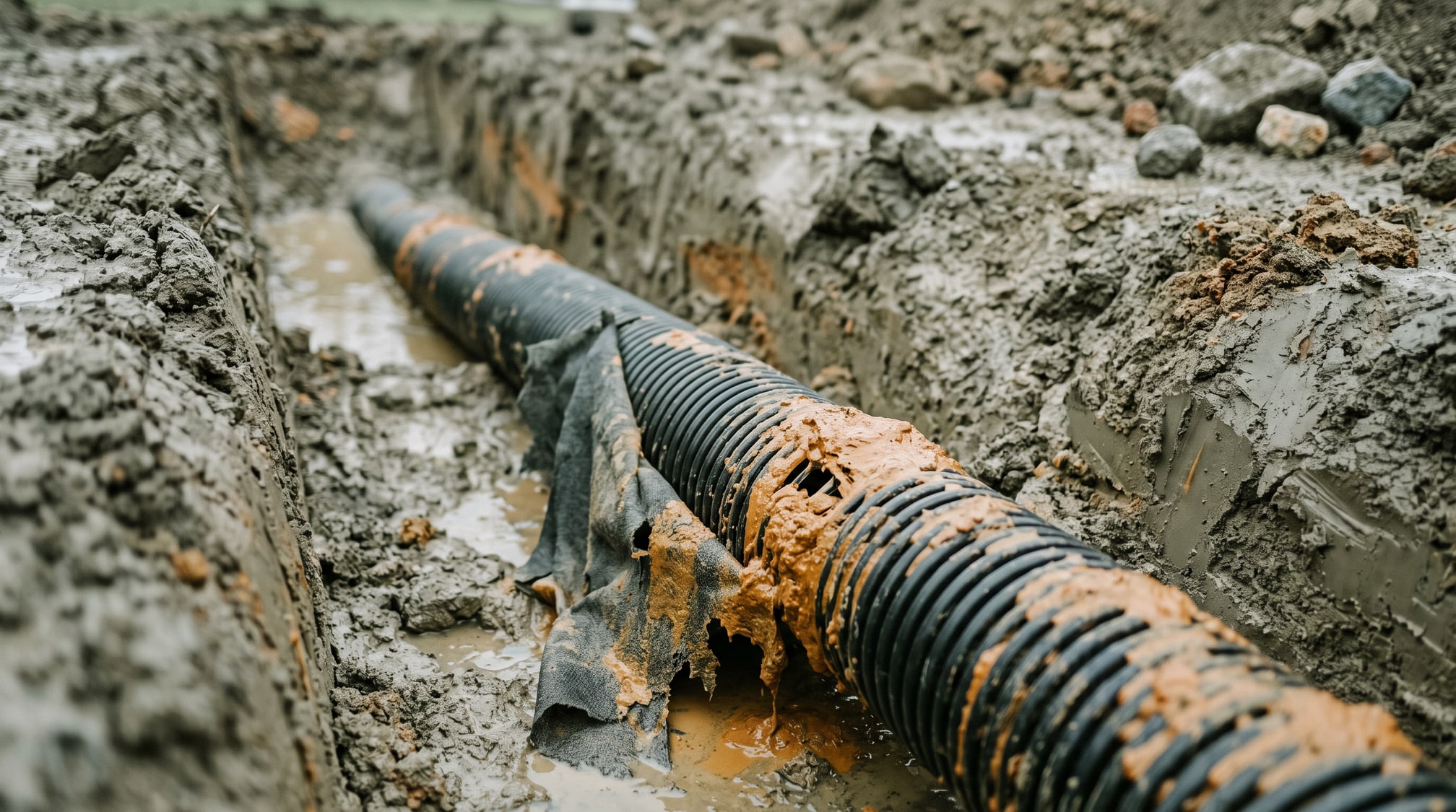
Unearthed perforated drain, its slots blocked by an iron ochre deposit
Iron ochre

An orange, slimy iron deposit that blocks the drain's perforations. In some areas, including Sainte-Sabine, it can fill a pipe in five years.
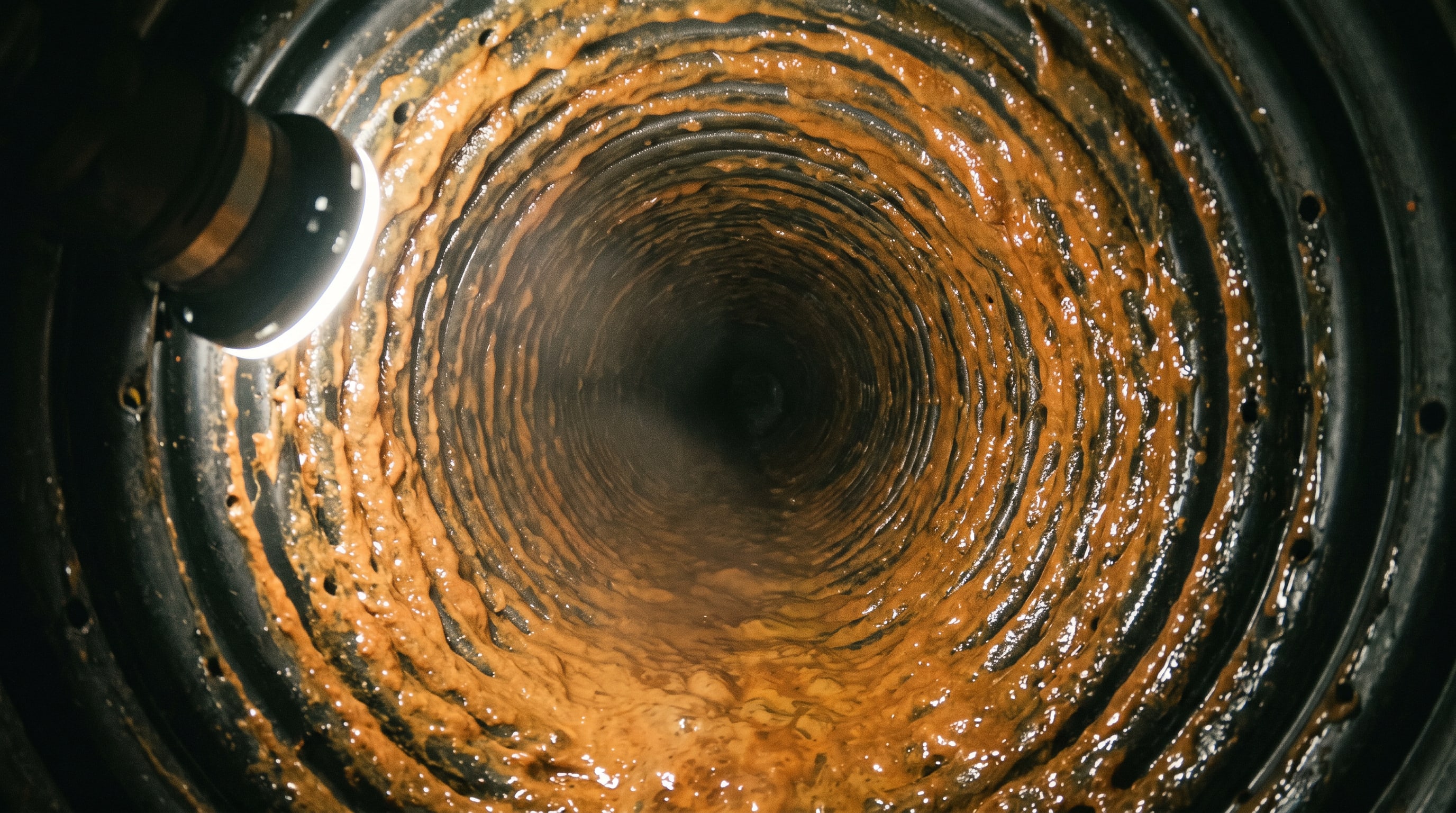
Camera view: orange iron ochre deposit in a perforated French drain
The silted pipe

Seen from inside, only a thin channel is left in the centre. The drain is still there, but it no longer drains anything at all.
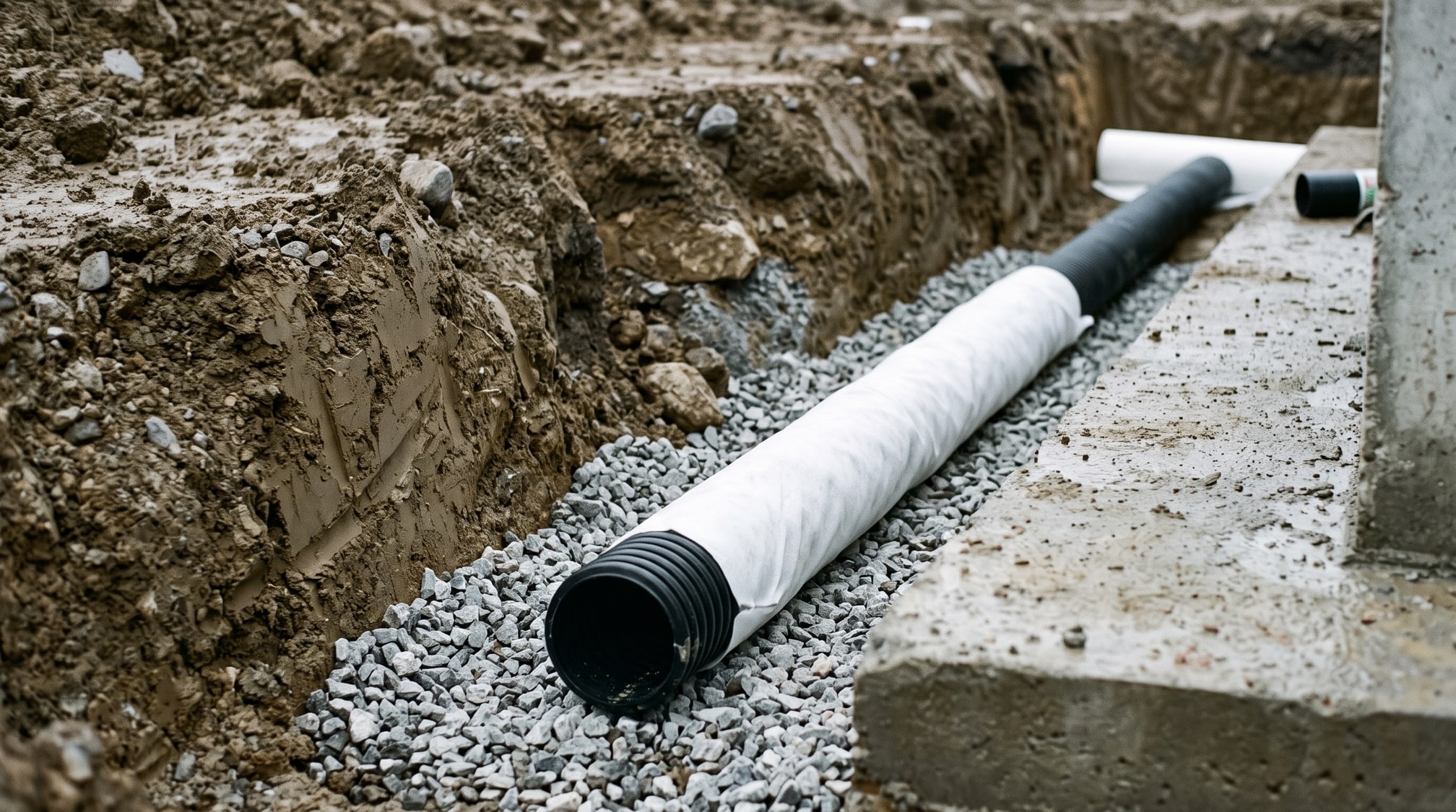
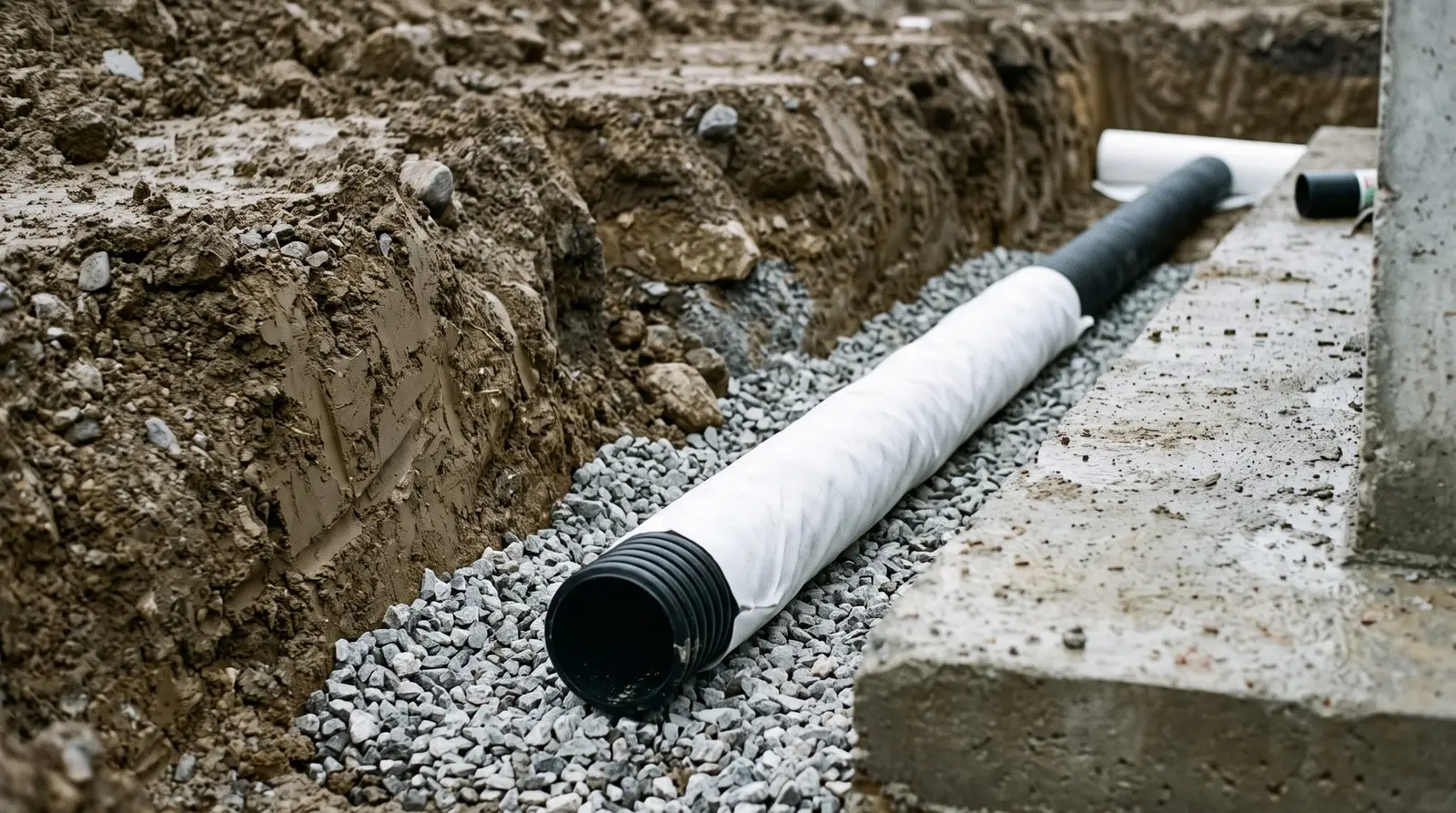
New drain laid on clean stone and wrapped in geotextile membrane
The redone drain

New pipe, clean membrane, clean stone, slope checked along the entire length. This is what a foundation that will stay dry for a long time looks like.
How it goes

We dig last, never first.

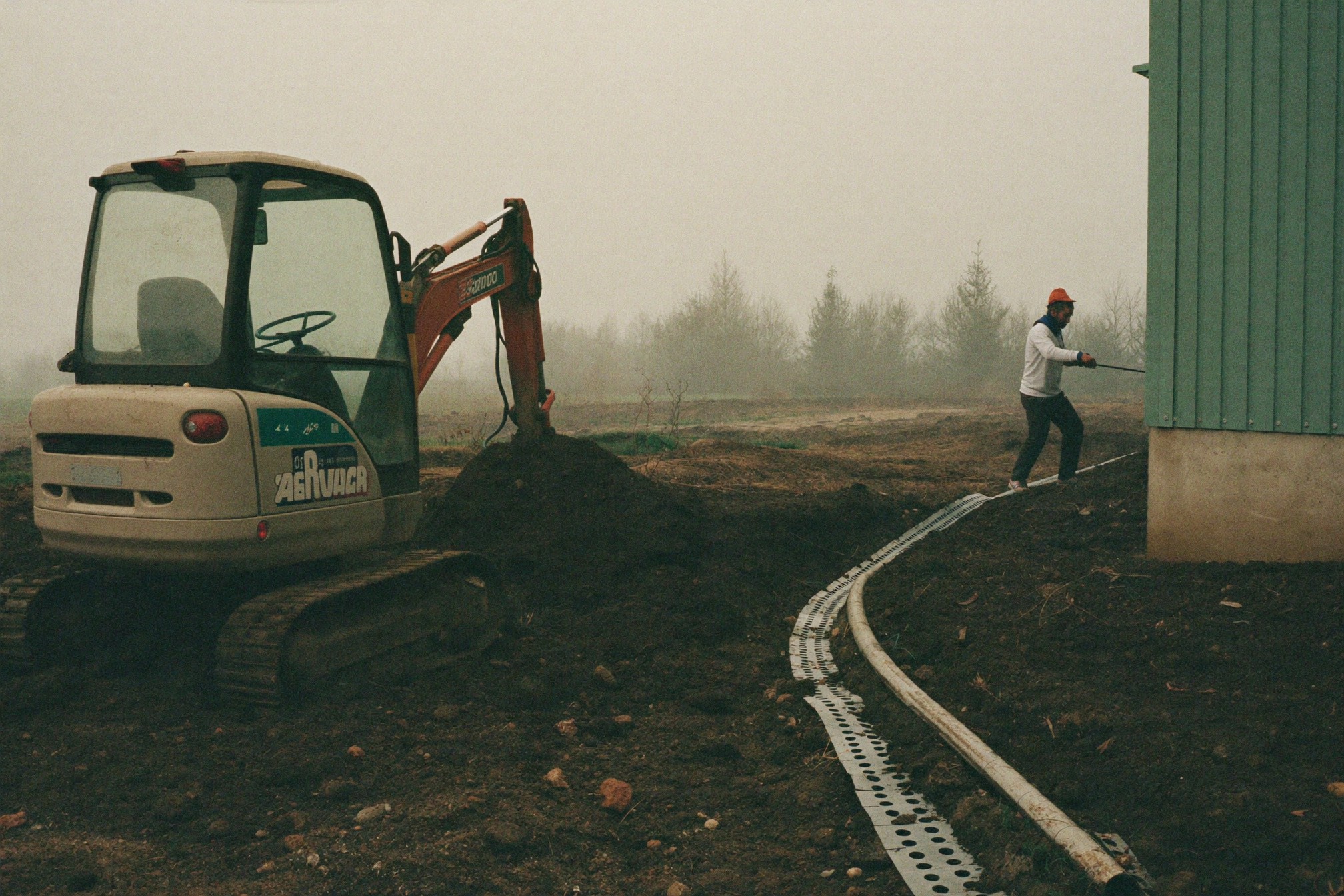
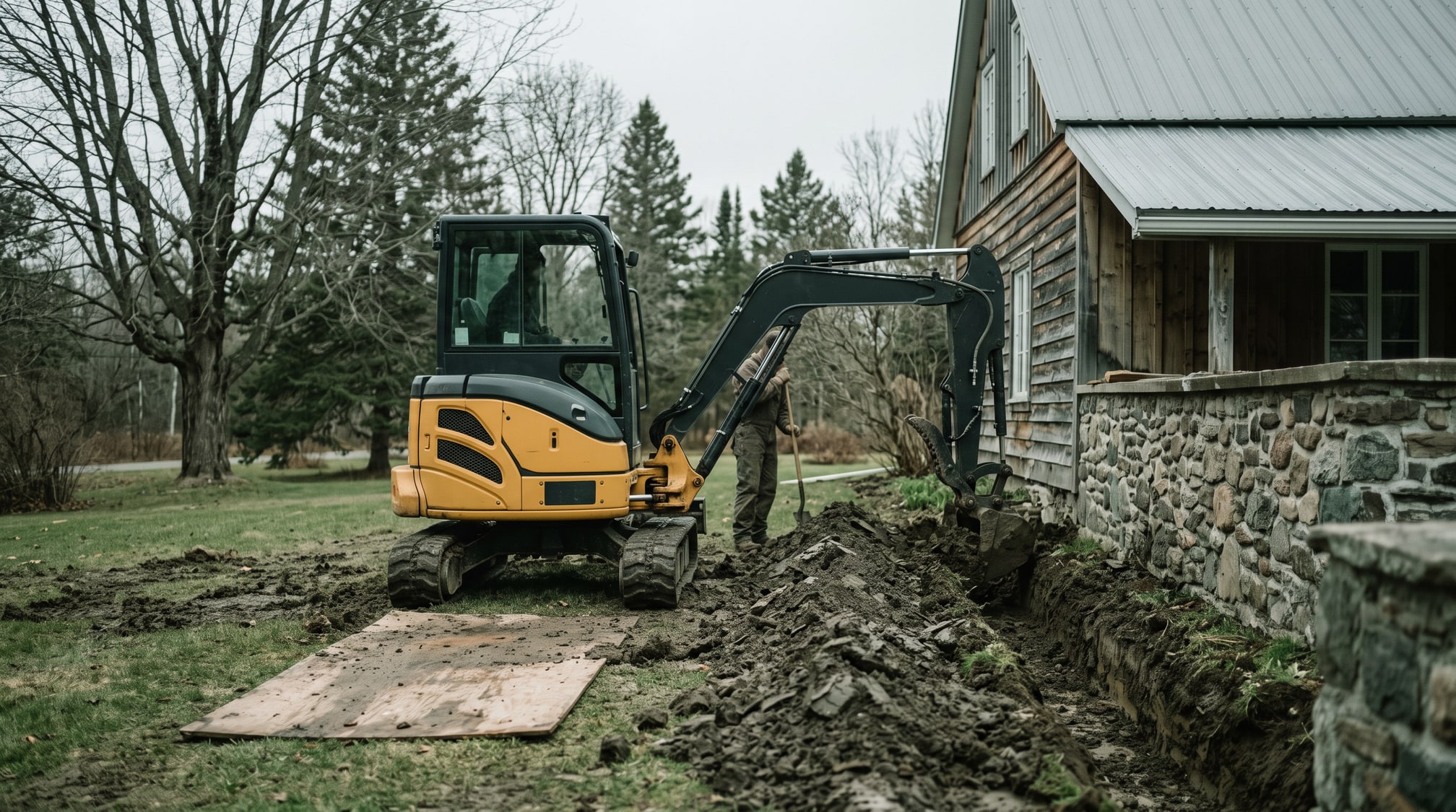
Mini-excavator opening a trench along the foundation of a country house
  1. 01

    We look before proposing

    Camera in the drain when there's an access, examination of the basement, the grading and the gutters. Many infiltrations have nothing to do with the drain.

  2. 02

    We document what we saw

    Photos, video, measurements. It's what lets you see clearly before deciding, and what your insurer will ask for.

  3. 03

    We prepare before bringing out the machine

    Mats on the ground, access cleared, landscaping marked. A prepared excavation does far less damage than people imagine.

  4. 04

    We excavate and replace

    New drain, membrane, clean stone, slope checked from one end to the other. It's the slope that makes a drain last, not the brand of pipe.

  5. 05

    We put the grounds back in order

    Compacted backfill, grading, lawn. We don't leave behind a trench that will sink on its own by the first fall.

The price

A French drain can't be quoted over the phone. Here's what sets two quotes apart.

  • What's countedThe length to excavate, the depth of the foundation, access to the lot and working time. A house surrounded by lawn and a house wedged between two hedges don't dig at the same pace.
  • What gets addedThe materials (pipe, membrane, clean stone) and backfill. Then the preliminary camera inspection when an access allows it: $350, video copy included.
  • What costs nothingTelling you it isn't the drain. It happens: a gutter dumping at the foot of the wall, a lot that pushes water toward the house, an isolated crack. We don't sell an excavation to someone who doesn't need one.

Our quote itemizes the length, the depth and the materials: you know exactly what you're paying for.

Have my situation assessed →
Iron ochre

In some areas, a new drain clogs again in five years.

  • Orange water coming out of the drain or staining the sump.
  • A slimy, rust-coloured deposit in the cleanout.
  • A metallic smell in the basement after a heavy rain.
  • A neighbour who has already had their French drain redone.

Iron ochre is a soil bacteria that feeds on the iron in the ground and leaves behind a deposit that blocks the drain's perforations. It's common in some areas of the region, including Sainte-Sabine. Redoing a drain without taking it into account means paying twice: what changes everything is a cleanout access and a maintenance schedule.
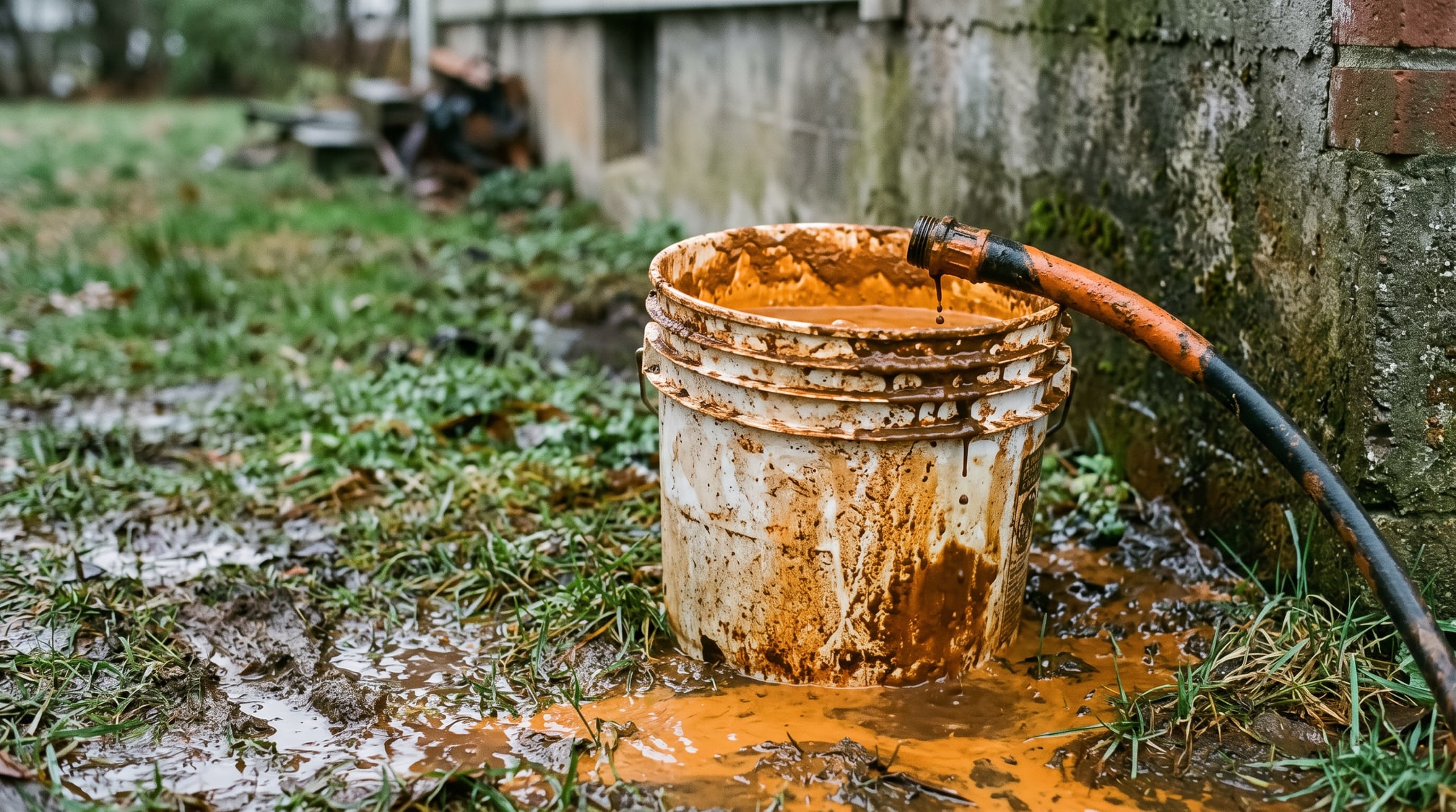
Bucket full of iron ochre deposit removed from a foundation drain
What comes next?

A redone drain lasts a long time, provided someone looks after it.

Frequently asked questions

The French drain, in five questions.

A well-installed drain, with a proper slope and an intact membrane, is measured in decades. What shortens it is almost never the pipe: it's the fine soil that settles in it, iron ochre in some areas, or roots. That's also why maintenance changes the lifespan so much.

It depends on what the inspection shows. When only one side of the house is affected and the rest of the drain is in good shape, we redo that side. When the drain is silted up along its whole run, the typical case in ochre areas, redoing a quarter just pushes the problem back a year.

No, but it will most certainly be opened up. We protect surfaces with mats, mark the landscaping before starting, and backfill with compaction so the ground doesn't sink. The lawn grows back; what we don't want is a trench that sinks on its own six months later.

The decision belongs to your insurer. Generally, wear on a drain isn't covered, while damage caused by an infiltration may be, depending on your policy. What we can do is document: video of the inspection, photos of what was dug up, an invoice itemized line by line. That's what serves a claim.

Because an excavation is planned on facts, not assumptions. The inspection says whether the drain really is at fault, on which section and at what depth to work. It avoids digging in the wrong place, and sometimes it concludes the drain has nothing to do with it: you then save the entire job.

Let's start by finding out what's really going on.

Tell us the situation. You'll get a clear answer, realistic expectations and a solution suited to your home.